
Quick answer: why do companies overbuy Autodesk licenses?
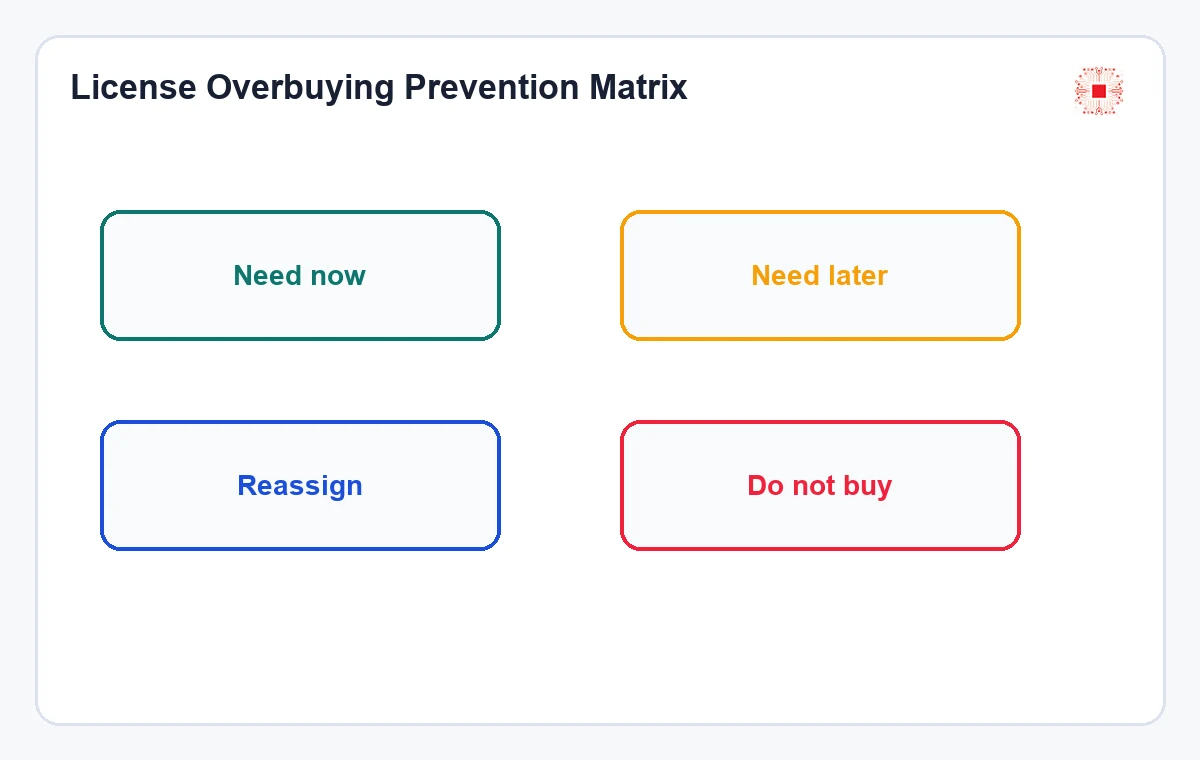
Companies often overbuy Autodesk licenses because they estimate demand by feeling instead of by project, user role and real usage period. Autodesk manages product access through users and seats in Autodesk Account; admins can assign or unassign product access, and each seat should be tied to a clearly authorized user. Optimization is not about buying the fewest seats, but buying the right seats for the right project phase and reclaiming them when the need ends.
The key idea is that an Autodesk license is not only a software expense; it is a project resource. Without an owner, start date, end date, real user, real device and assignment reason, the company cannot tell whether it lacks seats or has too many. A professional workflow connects project management, IT and finance: projects create demand, IT grants access, finance tracks cost and managers approve reclaim when the need ends.
In practice, each license should have one data row: product, user email, department, project, device, start date, review date, renewal date, proof of purchase and status. With this data, additional purchases are based on evidence instead of urgent messages from project teams. It also helps management understand which project each software cost supports and whether the cost should continue.
Need to review Autodesk seats before buying or renewing?
IT Systems can inventory users, projects and installed devices, then recommend the right seat count. See Autodesk licensing, the Autodesk Store category and ITS Manager license governance.
Start with a project map, not a software list
Before asking how many AutoCAD, Revit, Revit LT Suite, 3ds Max or AEC Collection licenses to buy, map the projects first: which projects are active, which are starting soon, which design stages need CAD/BIM/rendering, which deadlines require more users and when seats can be reduced. The licensed software stack for architecture and construction firms is the right foundation before purchase.
The key idea is that an Autodesk license is not only a software expense; it is a project resource. Without an owner, start date, end date, real user, real device and assignment reason, the company cannot tell whether it lacks seats or has too many. A professional workflow connects project management, IT and finance: projects create demand, IT grants access, finance tracks cost and managers approve reclaim when the need ends.
In practice, each license should have one data row: product, user email, department, project, device, start date, review date, renewal date, proof of purchase and status. With this data, additional purchases are based on evidence instead of urgent messages from project teams. It also helps management understand which project each software cost supports and whether the cost should continue.
Classify CAD, BIM, rendering and reviewer users
Not every technical user needs the same Autodesk package. A drafter may need AutoCAD or AutoCAD LT; a BIM architect may need Revit or Revit LT Suite; a visualization user may need 3ds Max; a project manager may only review files or reports. This classification prevents the most common waste: assigning powerful software to people who only open files occasionally.
The key idea is that an Autodesk license is not only a software expense; it is a project resource. Without an owner, start date, end date, real user, real device and assignment reason, the company cannot tell whether it lacks seats or has too many. A professional workflow connects project management, IT and finance: projects create demand, IT grants access, finance tracks cost and managers approve reclaim when the need ends.
In practice, each license should have one data row: product, user email, department, project, device, start date, review date, renewal date, proof of purchase and status. With this data, additional purchases are based on evidence instead of urgent messages from project teams. It also helps management understand which project each software cost supports and whether the cost should continue.
Role-based license classification table
The table below turns demand into a buying decision. The goal is not to push everyone into a cheaper tool, but to avoid assigning the wrong tool. As project roles change, every license should also have a status: active, paused, renewal review, reclaim or upgrade required.
The key idea is that an Autodesk license is not only a software expense; it is a project resource. Without an owner, start date, end date, real user, real device and assignment reason, the company cannot tell whether it lacks seats or has too many. A professional workflow connects project management, IT and finance: projects create demand, IT grants access, finance tracks cost and managers approve reclaim when the need ends.
In practice, each license should have one data row: product, user email, department, project, device, start date, review date, renewal date, proof of purchase and status. With this data, additional purchases are based on evidence instead of urgent messages from project teams. It also helps management understand which project each software cost supports and whether the cost should continue.
| Role | Typical need | How to avoid overbuying |
|---|---|---|
| 2D drafter | AutoCAD/AutoCAD LT | Do not assign Revit/AEC if only editing DWG |
| BIM architect | Revit/Revit LT Suite | Assign when the project truly needs BIM |
| Visualization user | 3ds Max | Assign to users who create scenes/renders |
| Reviewer/PM | Review, comment, manage | Do not default to full licenses |
| Freelancer/short term | Phase-based access | Set reclaim date from day one |
Use project timelines to choose term and purchase timing
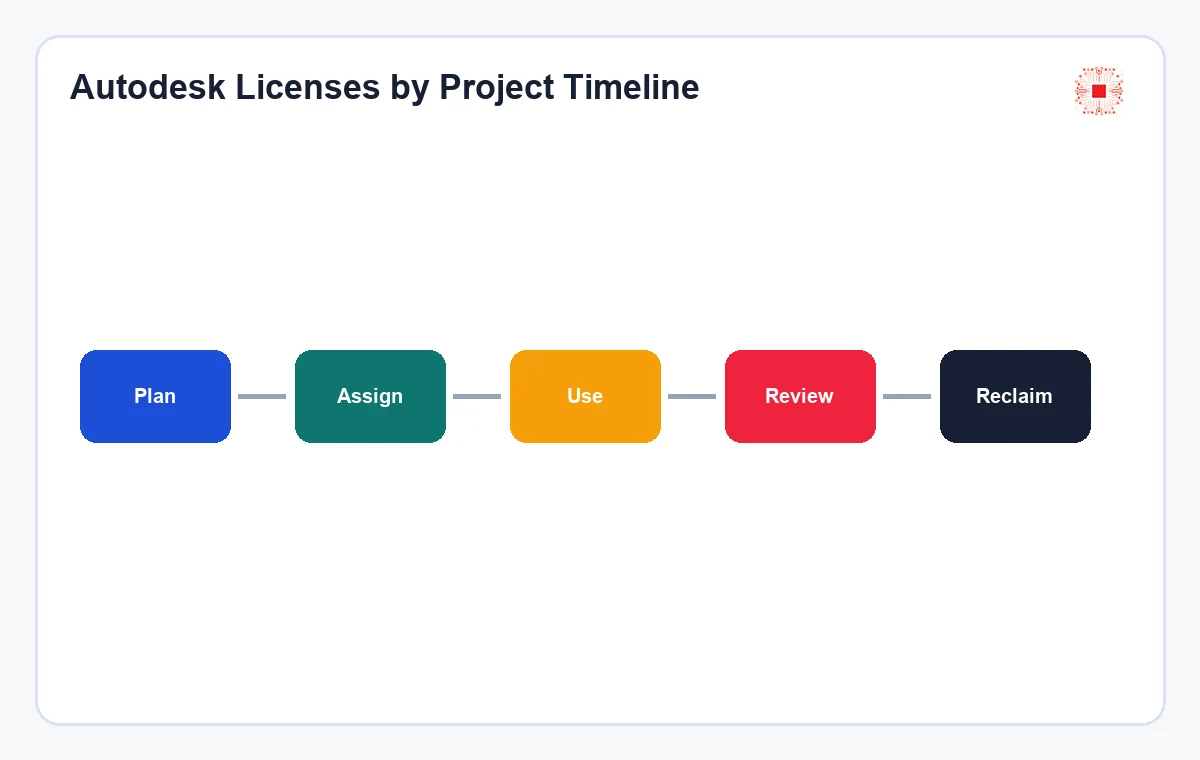
Autodesk licenses should be planned against project schedules, not only annual budgets. If a project needs extra users for only three or four months, the business should review start timing, renewal exposure, cost owner and reclaim plan after delivery. For long projects, avoid buying too close to deadlines because users need time to install, sign in, test sample files and resolve environment issues.
The key idea is that an Autodesk license is not only a software expense; it is a project resource. Without an owner, start date, end date, real user, real device and assignment reason, the company cannot tell whether it lacks seats or has too many. A professional workflow connects project management, IT and finance: projects create demand, IT grants access, finance tracks cost and managers approve reclaim when the need ends.
In practice, each license should have one data row: product, user email, department, project, device, start date, review date, renewal date, proof of purchase and status. With this data, additional purchases are based on evidence instead of urgent messages from project teams. It also helps management understand which project each software cost supports and whether the cost should continue.
Understand seat assignment, pool and subscription ID
Autodesk documentation describes user and product access management in Autodesk Account, with assignment by product, user or group; some cases can use pool assignment or subscription ID assignment. This matters for companies with multiple departments or projects: pool assignment can improve flexibility, while subscription ID assignment can help track cost or renewals by contract. Either way, the business still needs a record of who uses what and why.
The key idea is that an Autodesk license is not only a software expense; it is a project resource. Without an owner, start date, end date, real user, real device and assignment reason, the company cannot tell whether it lacks seats or has too many. A professional workflow connects project management, IT and finance: projects create demand, IT grants access, finance tracks cost and managers approve reclaim when the need ends.
In practice, each license should have one data row: product, user email, department, project, device, start date, review date, renewal date, proof of purchase and status. With this data, additional purchases are based on evidence instead of urgent messages from project teams. It also helps management understand which project each software cost supports and whether the cost should continue.
Do not share one seat between multiple people
A common mistake is assuming one license can be shared by several users if they do not work at the same time. Autodesk states that sign-in subscriptions assign a seat to a single authorized user and seats cannot be shared between users. Cost optimization should come from role classification, compliant reassignment and timely reclaim, not shared accounts or unmanaged installations.
The key idea is that an Autodesk license is not only a software expense; it is a project resource. Without an owner, start date, end date, real user, real device and assignment reason, the company cannot tell whether it lacks seats or has too many. A professional workflow connects project management, IT and finance: projects create demand, IT grants access, finance tracks cost and managers approve reclaim when the need ends.
In practice, each license should have one data row: product, user email, department, project, device, start date, review date, renewal date, proof of purchase and status. With this data, additional purchases are based on evidence instead of urgent messages from project teams. It also helps management understand which project each software cost supports and whether the cost should continue.
Process table to avoid overbuying Autodesk licenses
A solid process needs checkpoints before purchase, during the project and after the project. If the company only checks demand at quotation time, it can still overbuy two or three months later because people move projects, freelancers leave or a project is delayed. This table is designed for IT, project managers and finance to read together.
The key idea is that an Autodesk license is not only a software expense; it is a project resource. Without an owner, start date, end date, real user, real device and assignment reason, the company cannot tell whether it lacks seats or has too many. A professional workflow connects project management, IT and finance: projects create demand, IT grants access, finance tracks cost and managers approve reclaim when the need ends.
In practice, each license should have one data row: product, user email, department, project, device, start date, review date, renewal date, proof of purchase and status. With this data, additional purchases are based on evidence instead of urgent messages from project teams. It also helps management understand which project each software cost supports and whether the cost should continue.
| Stage | Action | Evidence to keep |
|---|---|---|
| Before purchase | Map projects, users, products | User + role list |
| Assignment | Assign correct email/user | Assignment date + reason |
| During project | Review usage and role changes | Change notes |
| Project close | Unassign/reassign/reclaim | Reclaim date + next project |
| Before renewal | Compare active seats and future demand | Approved renewal list |
Reclaim and reallocate licenses when a project ends
When a project ends, review which users still need the software, who moved to another project, which machines still have software installed, which files must be archived and which licenses can be unassigned or reassigned. The AutoCAD legalization roadmap should also be considered if the team previously used unclear software. Timely reclaim prevents the next project from buying new seats while usable seats already exist.
The key idea is that an Autodesk license is not only a software expense; it is a project resource. Without an owner, start date, end date, real user, real device and assignment reason, the company cannot tell whether it lacks seats or has too many. A professional workflow connects project management, IT and finance: projects create demand, IT grants access, finance tracks cost and managers approve reclaim when the need ends.
In practice, each license should have one data row: product, user email, department, project, device, start date, review date, renewal date, proof of purchase and status. With this data, additional purchases are based on evidence instead of urgent messages from project teams. It also helps management understand which project each software cost supports and whether the cost should continue.
Prepare clean data before requesting an Autodesk quote
Before requesting a quote, prepare user list, roles, Autodesk emails, required products, assigned projects, required usage period, device readiness, existing licenses, VAT invoice needs and admin owner. The software license quotation checklist helps collect this data. Cleaner data produces a more accurate quote and reduces wrong purchases.
The key idea is that an Autodesk license is not only a software expense; it is a project resource. Without an owner, start date, end date, real user, real device and assignment reason, the company cannot tell whether it lacks seats or has too many. A professional workflow connects project management, IT and finance: projects create demand, IT grants access, finance tracks cost and managers approve reclaim when the need ends.
In practice, each license should have one data row: product, user email, department, project, device, start date, review date, renewal date, proof of purchase and status. With this data, additional purchases are based on evidence instead of urgent messages from project teams. It also helps management understand which project each software cost supports and whether the cost should continue.
Use ITS Manager to govern the license lifecycle
With ITS Manager software license management, a company can record users, devices, proof of purchase, purchase date, renewal date, project, department and assignment status. This is where IT Systems differs: we do not only support Autodesk licensing purchases; we help customers control licenses after purchase to avoid over-installation, cracked software, excess buying and missed renewals.
The key idea is that an Autodesk license is not only a software expense; it is a project resource. Without an owner, start date, end date, real user, real device and assignment reason, the company cannot tell whether it lacks seats or has too many. A professional workflow connects project management, IT and finance: projects create demand, IT grants access, finance tracks cost and managers approve reclaim when the need ends.
In practice, each license should have one data row: product, user email, department, project, device, start date, review date, renewal date, proof of purchase and status. With this data, additional purchases are based on evidence instead of urgent messages from project teams. It also helps management understand which project each software cost supports and whether the cost should continue.
How IT Systems helps optimize Autodesk licenses
IT Systems can inventory installed software, compare it with project demand, classify AutoCAD/Revit/3ds Max users, advise between AutoCAD LT, full AutoCAD, Revit LT Suite, full Revit or AEC Collection, prepare VAT quotation and set up a license management process. If the company is deciding between AutoCAD editions, the AutoCAD LT vs full AutoCAD article is a useful next step.
The key idea is that an Autodesk license is not only a software expense; it is a project resource. Without an owner, start date, end date, real user, real device and assignment reason, the company cannot tell whether it lacks seats or has too many. A professional workflow connects project management, IT and finance: projects create demand, IT grants access, finance tracks cost and managers approve reclaim when the need ends.
In practice, each license should have one data row: product, user email, department, project, device, start date, review date, renewal date, proof of purchase and status. With this data, additional purchases are based on evidence instead of urgent messages from project teams. It also helps management understand which project each software cost supports and whether the cost should continue.
FAQ: avoiding Autodesk license overbuying
Should a company buy spare seats? Only when there is a clear project plan; otherwise spare seats become idle cost. Can a license be moved when staff change projects? Reassignment can be reviewed through the admin process and account conditions. Should everyone get the same package? No. Does ITS Manager replace Autodesk Account? No; it adds internal governance for evidence, devices and license lifecycle.
The key idea is that an Autodesk license is not only a software expense; it is a project resource. Without an owner, start date, end date, real user, real device and assignment reason, the company cannot tell whether it lacks seats or has too many. A professional workflow connects project management, IT and finance: projects create demand, IT grants access, finance tracks cost and managers approve reclaim when the need ends.
In practice, each license should have one data row: product, user email, department, project, device, start date, review date, renewal date, proof of purchase and status. With this data, additional purchases are based on evidence instead of urgent messages from project teams. It also helps management understand which project each software cost supports and whether the cost should continue.
Need to review Autodesk seats before buying or renewing?
IT Systems can inventory users, projects and installed devices, then recommend the right seat count. See Autodesk licensing, the Autodesk Store category and ITS Manager license governance.