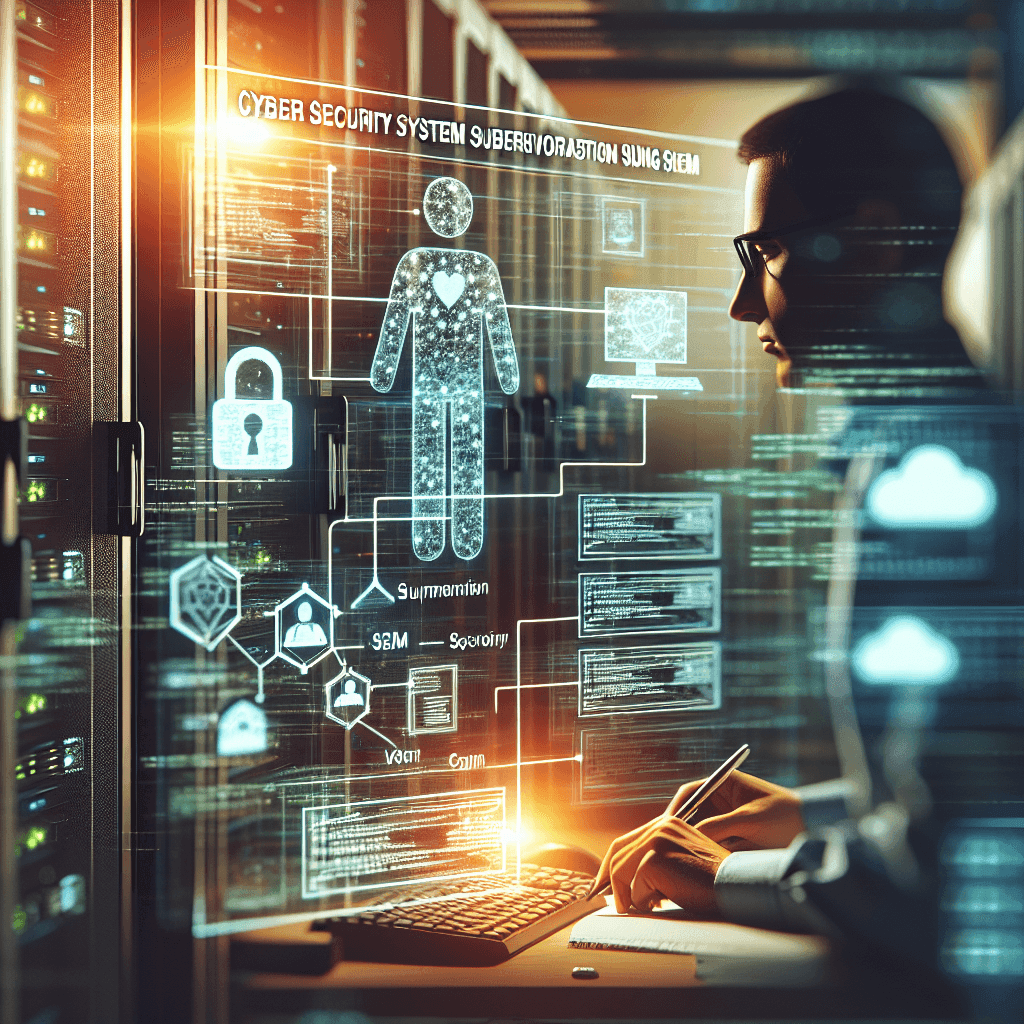
In the context of increasingly complex cybersecurity, monitoring security systems becomes vital for all organizations. SIEM (Security Information and Event Management) has emerged as a comprehensive solution, helping to collect, analyze, and respond to threats effectively. This article will delve into monitoring network security systems with SIEM, from definition, role, operational processes to benefits and challenges in implementation, helping you understand more about this powerful tool.
1. Monitoring Network Security Systems with SIEM: An Overview of Cybersecurity Monitoring Solutions
SIEM stands for Security Information and Event Management, a technology solution used to collect, analyze, and manage security data from various sources within a business’s network system. The main goal of SIEM is to ensure cybersecurity through monitoring and detecting significant security events.
Definition of SIEM (Security Information and Event Management)
SIEM is an integrated system that combines two main functions: collecting and analyzing security data from a variety of devices and applications in an organization’s IT environment. It helps identify, assess, and respond to threats quickly and efficiently.
Main Components of the SIEM System
- Log collector: Collects data from devices and applications in the system
- Database: Stores and manages the collected data
- Analysis tools: Automatically analyzes and looks for anomalies in the data
- User interface: Provides information and reports for system administrators
Basic Functions of SIEM: Collection, Analysis, Alerting, Reporting
SIEM provides many basic and important functions, including:
- Collecting and normalizing data from multiple sources
- Detecting abnormal behavior and alerting administrators
- Reporting and storing data to facilitate incident investigation
Differentiating SIEM, SIM, and SEM: Which Option is Suitable?
SIEM is often confused with SIM (Security Information Management) and SEM (Security Event Management). While SIM focuses on storing and managing security information, SEM primarily focuses on monitoring and analyzing security events. SIEM combines both functions, offering the most comprehensive solution for businesses.
2. Why Do Businesses Need SIEM for Cybersecurity Monitoring?
The implementation of cybersecurity monitoring with SIEM is becoming more necessary than ever due to current cybersecurity challenges. Especially, cyber attacks are increasingly sophisticated and complex, threatening the integrity and security of business data.
Current Cybersecurity Challenges and the Role of SIEM
Businesses today face numerous risks related to cybersecurity such as ransomware, malware, and other advanced attack forms. SIEM plays a crucial role in helping businesses detect and respond promptly to these threats.
Centralized and Comprehensive Monitoring Capability of SIEM
SIEM centralizes the monitoring of cybersecurity, allowing organizations to track all system activities, from servers, applications to networks. This optimizes the incident detection process.
Early Detection of Attacks and Abnormal Behavior
With log analysis technology and event correlation, SIEM can detect early attacks and abnormal behaviors in real time.
Examples of Attack Situations Detected by SIEM
- DDoS attacks can be detected through unusual increases in network traffic
- Unauthorized access actions into the system can be alerted through established rules
Enhancing Compliance with Security Standards (ISO 27001, PCI DSS, GDPR…)
Businesses will also find it easier to ensure compliance with security standards and regulations by using SIEM, thanks to its ability to record and analyze all security events.
3. Monitoring Network Security Systems with SIEM: The Operational Process from A to Z
The operational process of the SIEM system is relatively complex but can be summarized into the following basic steps:
Collecting and Normalizing Log Data from Multiple Sources
SIEM collects log data from various sources such as Firewall, IDS/IPS, Endpoint, Server…. This ensures that every aspect of the system is being monitored.
Common Log Sources: Firewall, IDS/IPS, Endpoint, Server…
- Firewall: Monitors incoming and outgoing network traffic
- IDS/IPS: Detects and prevents cyber attacks
- Endpoint: Monitors activities on personal devices
- Server: Monitors events and errors from server systems
Analyzing and Correlating Events
This process involves analyzing and correlating events to detect patterns of data related to threats. Techniques for event analysis include:
- Rule-based: Using fixed rules to detect threats
- Behavior-based: Analyzing behaviors to detect abnormal patterns
- Threat Intelligence: Utilizing information about existing threats to enhance detection capabilities
Generating Alerts and Notifications (Alerting)
SIEM generates alerts when incidents or suspicious behavior is detected. Customizing alert thresholds to minimize false positives is crucial.
Customizing Alert Thresholds to Minimize
FAQ
When should a business ask IT Systems for support?
Ask for support when the issue affects users, business data, security, licensing compliance, service availability or daily operations. A short technical review often prevents repeated incidents and hidden costs.
Can IT Systems help review the current environment before proposing a solution?
Yes. IT Systems can review the current setup, identify risks, map the issue to the right service scope and recommend a practical next step for your business.
Does this topic connect to ongoing IT operations?
In most cases, yes. Problems around software, cloud, endpoint, network, backup or security should be connected to a broader IT operations plan instead of being handled as isolated incidents.
Need help applying this to your business?
IT Systems Vietnam can help assess the issue, recommend the right service path and support implementation for your team.