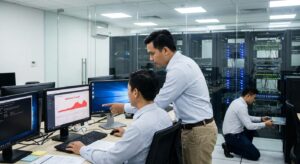
In today’s digitized business environment, virtualized servers play a crucial role in helping businesses optimize costs and flexibly scale their infrastructure. However, virtualization server errors frequently cause virtual server slowdown, leading to VM lag and reduced overall productivity. Many system administrators encounter this issue without identifying the root cause, allowing the problem to persist and impact business operations. This article provides a detailed analysis of the common causes behind virtualization server errors, practical troubleshooting instructions, and long-term recommendations to prevent virtualization errors and VM performance issues from recurring.
Identifying Common Signs of Virtual Server Slowdown and VM Lag
When the system experiences problems, initial signs may not be obvious but gradually become severe if not addressed promptly. Virtual server slowdown typically manifests through decreased performance in virtual machines, forcing users to wait longer for everyday tasks such as accessing applications or processing data.
Specific symptoms include unusually long VM startup times, sluggish application response within the virtual environment, or intermittent system freezing. VM lag can also disrupt team workflows, particularly with resource-intensive applications like databases or development environments.
At the infrastructure level, you may notice the host server consistently running at near-maximum CPU or RAM usage, even when the actual workload is not heavy. Additionally, system logs frequently record issues related to resource allocation, network packet loss, or storage latency. These recurring signs serve as clear warnings of virtualization server errors that require immediate attention.
Regular monitoring through the hypervisor management dashboard enables early detection, helping prevent unexpected downtime that could affect the entire IT system.
Root Cause Analysis of Virtualization Server Errors
Virtualization server errors rarely stem from a single factor; they are typically the result of combined issues in system design, operational configuration, and insufficient maintenance. Understanding these root causes allows businesses to implement both immediate fixes and long-term prevention strategies.
Resource Overcommitment Leading to Contention Between VMs
One of the most common causes is allocating more resources than the physical host can actually support. When the hypervisor allows too many VMs to share CPU, RAM, or bandwidth, resource contention occurs, resulting in noticeable virtual server slowdown and VM performance issues. For instance, if the total vCPUs assigned exceed the physical cores, the scheduler must time-slice, causing significant latency.
Similarly, memory overcommitment without effective ballooning or swapping mechanisms forces the system to use disk-based swap files, dramatically reducing data access speeds.
Storage System and I/O Bottlenecks
Storage is a critical component in virtualized environments. When multiple VMs compete for access to the same datastore on HDDs instead of SSDs, or when SAN/NAS latency is high, I/O bottlenecks emerge. This is especially problematic for read/write-intensive workloads such as database servers or virtual file servers.
The outcome is virtualization errors related to storage latency, making the entire system feel sluggish despite available CPU and RAM capacity.
Virtual Networking Issues and Suboptimal Configuration
Poorly designed virtual networks, such as vSwitches lacking sufficient bandwidth reserves or incorrect VLAN configurations, create network contention between VMs. High network latency leads to VM lag during inter-VM communication or external connections, a common issue in multi-tenant or hybrid cloud environments.
Outdated Hypervisor, Incompatible Drivers, and Missing Updates
Virtualization platforms like VMware vSphere, Microsoft Hyper-V, or KVM that are not regularly patched with the latest performance and security updates often contain bugs that cause system slowdown and hypervisor errors. Incompatible hardware drivers further contribute to unpredictable virtualization server errors.
Additionally, unoptimized guest OS environments (with excessive background processes or memory leaks) indirectly increase the load on the host.
Practical Troubleshooting Guide for Virtualization Server Errors
Resolving virtualization server errors requires a systematic approach, from diagnosis to optimization. The following practical steps can be implemented immediately without a complete infrastructure overhaul.
Comprehensive System Performance Monitoring and Analysis
Utilize built-in hypervisor tools such as vCenter Performance Charts or Hyper-V Manager to track real-time metrics. Pay close attention to CPU ready time, memory ballooning, disk latency, and network throughput. When contention is identified, adjust resource allocation by right-sizing vCPU or vRAM for lower-priority VMs.
Third-party solutions like SolarWinds Virtualization Manager or PRTG Network Monitor can provide early alerts before virtual server slowdown and VM performance issues become critical.
Optimizing VM and Host Server Configurations
Review and right-size every VM: remove unnecessary resources and install paravirtualization drivers such as VMware Tools or Hyper-V Integration Services to enhance I/O performance. Migrate heavy workloads to SSD datastores or implement storage tiering where possible.
For networking, reconfigure port groups, enable jumbo frames by increasing MTU, and implement NIC teaming for load balancing. Updating host server firmware and network drivers is essential to eliminate virtualization errors caused by compatibility problems.
Advanced Techniques: Load Balancing and Proactive Maintenance
Leverage features like VMware Distributed Resource Scheduler (DRS) or equivalent tools to automatically migrate VMs across hosts during load imbalances. Establish regular maintenance schedules, including off-peak VM restarts and hypervisor patching.
If issues persist after optimization, consider infrastructure expansion by adding hosts or upgrading CPU/RAM. For organizations lacking specialized in-house expertise, partnering with professional IT Support services specializing in virtualization delivers fast and effective resolution.
Long-Term Strategies to Prevent Virtual Server Slowdown and Virtualization Errors
Temporary fixes only address symptoms. To prevent virtualization server errors, virtual server slowdown, and VM performance issues from recurring, businesses must adopt sustainable operational strategies. Begin with accurate capacity planning that anticipates future workloads rather than focusing solely on current demands.
Deploy 24/7 monitoring systems with appropriate alert thresholds, combined with automation scripts for dynamic resource scaling. Provide ongoing training for IT teams on virtualization best practices, including avoiding overprovisioning and performing regular guest OS optimization.
Consider adopting a hybrid cloud model for highly variable workloads to distribute load and reduce pressure on on-premise infrastructure. Disaster recovery planning also contributes to improved performance by maintaining systems in an optimized state.
For medium and large enterprises, collaborating with professional IT Helpdesk services ensures system stability without the overhead of maintaining a large in-house team.
Take Action Now to Optimize Your Virtualized Server Environment
Virtualization server errors left unaddressed can lead to data loss, service disruptions, and significantly higher recovery costs. By following the guidance above, businesses can effectively resolve virtual server slowdown, VM lag, and VM performance issues while enhancing the overall efficiency of their IT infrastructure.
Begin today by auditing your current virtualization environment, identifying bottlenecks, and developing a clear improvement roadmap. A well-optimized virtualization system delivers a genuine competitive advantage, allowing teams to focus on business growth rather than constant troubleshooting.
If you require expert assistance, feel free to contact professional IT support services for businesses tailored to your scale and specific requirements.