In the context of everything becoming increasingly digital, it is undeniable that information technology (IT) plays a huge role in the development of businesses. In particular, small and medium enterprises (SMEs) face many challenges in deploying and taking advantage of this technology. Major challenges such as limited investment costs, lack of quality human resources, and low awareness of information security are common problems. Therefore, understanding and facing these challenges properly will help small businesses not only improve but also rise to strong competition. In this article, we will take a closer look at each specific challenge as well as solutions to overcome it.
Challenges in the implementation of information technology
When we talk about the challenges of IT deployment, we can imagine the story of an expedition team that goes deep into the jungle in search of treasure. On that journey, they had to overcome snakes, swamps and roads full of obstacles to reach their destination. Small businesses are the same, the deployment of information technology is like entering a “deep forest”. Each challenge appears as a big barrier, and if you overcome it, you will clearly see the true value of the technology brought.
Lack of financial resources for IT investment
One of the most common problems in small and medium-sized businesses is the lack of financial resources to invest in information technology. Imagine technology as an ancient tree that needs to be watered regularly to thrive, if there is a lack of water – that is, financial resources – the tree will wither. Businesses may want to invest in enterprise management software (ERP), customer management software (CRM), or cybersecurity tools, but the cost of these tools is often quite high.
According to a report by Cisco, the budget for information technology of small businesses accounts for only 0.05% – 0.08% of revenue, while the average in the US is up to 1.5%. Notably, the lack of finance not only affects software procurement but also limits the ability to maintain and upgrade existing technology systems.
A specific example is the often expensive implementation of ERP software with diverse modules such as human resource management, finance, production, and warehouse. ERP software packages such as SAP Business One, Oracle Netsuite, or Microsoft Dynamics 365 also cost quite a bit to install and maintain, not to mention other fees such as staff training, maintenance, and upgrade costs.
Additionally, due to a lack of financial resources, many small and medium-sized businesses have to look for free or low-cost solutions. However, the use of these solutions brings problems such as limited features, security issues, and difficulty integrating with other systems. That makes it easy for businesses to be trapped in the vicious cycle of having to constantly update and optimize discrete software solutions.
Difficulties in finding quality IT human resources
Not only facing financial constraints, SMEs also face a shortage of quality IT personnel. If you think of the business as a race car, IT engineers are the drivers. Without talented drivers, it is difficult to achieve the highest speed and efficiency.
According to Cisco Corporation’s prediction, the information technology industry will face a shortage of more than 500,000 information technology engineers by 2025, while the current number of engineers in the industry is only about 400,000. Competition in attracting talent is fiercer than ever, especially with large companies being able to offer attractive compensation and benefits packages to attract good employees, making it difficult for small businesses to compete.
The migration trend of IT engineers is also a prominent problem. With 57% of IT professionals saying they want to work abroad if given the opportunity, domestic businesses are losing important talents. The already scarce quality of human resources has become even more difficult to find.
The ability to find and retain talent depends not only on salary but also on the work environment, learning opportunities, promotion, and company culture. While large companies can provide a modern work environment with plenty of opportunities for growth, many small businesses don’t have the resources to create those values. This limits the ability to attract and retain talented IT staff.
The ability to apply technology is still limited
Imagine that small businesses are racing in a big race where they all use the same technology, but don’t know how to apply it optimally, it is difficult to achieve the best results. The limited ability to apply technology is a big challenge for SMEs.
Many small and medium-sized enterprises face difficulties in deploying and adopting new technologies due to a lack of financial and technical resources. According to reports, only about 40% of small businesses in Vietnam apply advanced management software to their business processes. The main reason is the lack of technical resources and not enough human resources to train and develop effective IT applications.
The lack of ability to apply technology is also evident through the weak management ability of the leadership team at small businesses. The majority of business owners do not participate in formal management training, they only rely on personal experience to operate. This leads to an unmethodical and ineffective strategy and approach to technology.
In addition, many small businesses are not fully aware of the role of technology in business development. Instead of seeing technology as a long-term investment that improves productivity and saves costs, they often see it as an unnecessary expense, especially in the face of short-term financial hardship.
To overcome these problems, support from government agencies, organizations and the community is needed to provide training, advice and update with the latest technologies. Only then will businesses hope to overcome challenges related to the ability to apply technology and truly take full advantage of their potential.
Challenges in the implementation of information technology
Cybersecurity and Small Business Risks
In the age of digitalization, with the development of the Internet and network systems, cybersecurity has become a vital issue for every business, especially small and medium-sized enterprises. Not only protecting the system from malware, cybersecurity also directly affects customer trust, business reputation and business existence in a fiercely competitive market.
Cyber attacks are on the rise
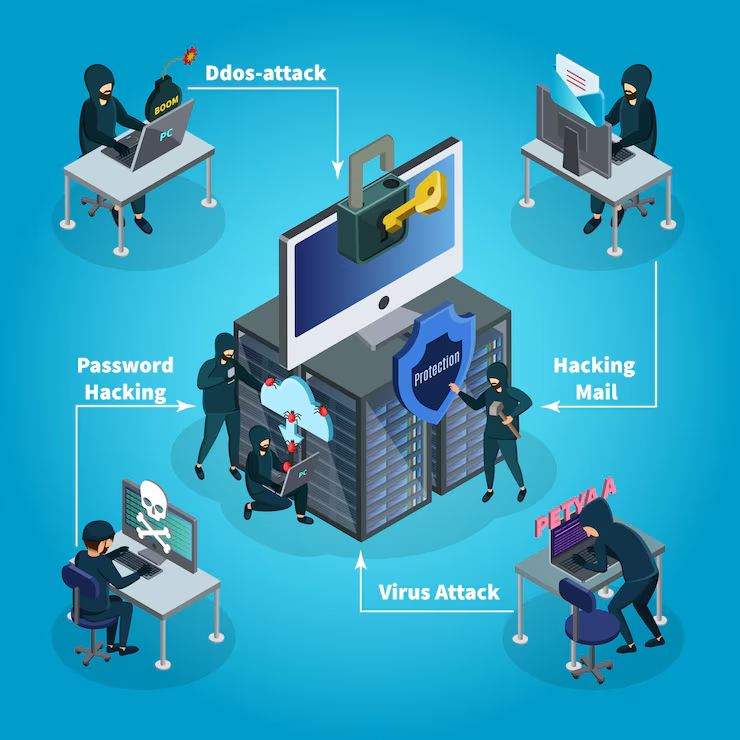
If you compare cybersecurity to a solid wall that protects your business, cyber attacks can be seen as intruders who are always looking for ways to break in and destroy that wall. The increase in cyberattacks has been a major threat to small and medium-sized businesses.
In 2023, Vietnam has recorded about 13,900 cyberattacks on organizations and businesses, equivalent to an average of about 1,160 cases per month. This figure increased to 9.5% from the previous year, reflecting a worrying reality as small and medium-sized businesses become easy targets for cyberattacks.
One of the common types of attacks is ransomware, where hackers encrypt a business’s data and demand a ransom to restore it. Small businesses that do not have the resources and tools to deal with such situations will face a lot of difficulties. This raises the need to invest in more robust security solutions.
Low awareness of information security
Awareness of information security is like a bright light for businesses on the way to dealing with cyber threats. However, the 2022 report found that 44% of SMEs said they were not sufficiently aware of cybersecurity issues. This shows that there is a big gap in training and improving knowledge for employees and leaders.
Viettel’s report indicates that the number of personal information stolen in the first half of 2024 has increased by 50% compared to the same period last year. Small and medium-sized businesses, which often have limited resources to invest in security technology, have become easy targets for cybercriminals. It is clear that misperceptions and lack of investment in information security make it easy for businesses to become “bait” for attacks.
A Cisco study found that 86% of small and medium-sized businesses have experienced cyber attacks, 59% of which have reported a network incident in the past year. These figures underscore the severity of low awareness of information security.
The damage caused by a cybersecurity incident
The damage from a cybersecurity incident is like losing an important part of a business’s body, which is not only painful but also affects overall health and viability. Businesses can lose important data, brand image, and even be heavily fined if they do not properly secure customer information.
Many businesses have lost trust from customers after being cyberattacked, seriously affecting long-term revenue. For example, a cyberattack on a business’s payment system can expose sensitive financial information of customers, thereby leading to a loss of trust and loss of potential customers.
The cost of recovering from a cyber attack is also not small, accounting for a large part of the business’s budget. These costs include upgrading security systems, hiring consultants, and legal-related costs. A cybersecurity incident can entail serious financial and time consequences, making it difficult for businesses to regain their position quickly.
Raising awareness and implementing effective cybersecurity solutions is extremely necessary, helping small and medium-sized businesses not only protect information but also maintain customer trust, thereby developing sustainably in today’s business environment.
Cybersecurity and IT Risks
Data Management in Small Business
When small and medium-sized enterprises (SMEs) are faced with data management, they are running a large ship in the middle of a sea of data without accurate maps. Difficulties around data storage, management, and security often create major barriers, making it easier for the ship to get lost and encounter more turbulence.
Difficulties in storing and managing data
Storing data is like trying to put thousands of puzzle pieces in the right place in one big picture. However, without a clear system and plan, things can easily get messy and lead to loss of control.
One of the main difficulties faced by small businesses is the lack of resources and expertise in data management. Not only does e-learning employees lack the skills to use advanced data management systems, but many businesses also don’t have the financial resources to invest in these solutions. This results in data being managed manually, inconsistently, and prone to errors.
Weak information technology systems are another problem. Many businesses still rely on outdated technologies or even no IT systems to manage data. This slows down the processing process and increases the risk of information loss.
Some small businesses also struggle to collect and analyze data. Due to a lack of financial and technical resources, they are unable to conduct surveys or collect data in a methodical manner, leading to difficulties in making strategic decisions based on data. Instead of making decisions based on specific and reliable information, they must rely on personal estimates or experiences, which can easily lead to wrong decisions.
Lack of effective management software
When small businesses don’t have effective management software, managing data is like trying to go golf with any club. While it is possible to make lucky shots, it certainly does not achieve the same efficiency and consistency as when using professional tools.
Management software is critical to ensuring that all data is streamlined and easily accessible. Some typical software in the market to support data management for small and medium-sized businesses include MISA, AMIS, Ecount, HTsoft BizMan ERP. These software offers features such as human resource management, sales and customer management, warehouse management, financial management, and accounting.
However, many small and medium-sized businesses have not yet taken advantage of this software tool effectively. The choice of software that does not suit the specific needs of the business or lacks customization and poor integration significantly reduces the work performance of employees and the business as a whole.
Sensitive data security issues
If you think of a business as a castle, then sensitive data is a treasure that needs to be protected. Data security is one of the top concerns for small businesses. The protection of sensitive information of customers and businesses needs really strong measures, but not all businesses focus on it.
Data security should include encryption of data at rest and transmission, in order to prevent unauthorized access. Two-factor authentication is also an effective measure to increase login security. Access policies need to be established to restrict unauthorized people from accessing sensitive data.
Additionally, periodic data backups are the best way to ensure that important data can be recovered when lost or attacked. However, many small businesses do not have clear data security policies, making them vulnerable to breaches and loss of important information.
To ensure data safety, businesses need to invest in security tools, build detailed security strategies, and train employees on information security measures. This is not only the responsibility of IT professionals but also the commitment of the entire organization.
Information technology solutions offered
In the ever-evolving world of digitalization, the application of information technology solutions is indispensable for small and medium-sized businesses. These can be considered as “golden keys” that open the door to improvement, improve efficiency and productivity. From business management software, cloud computing solutions, to e-commerce platforms, each type brings its own benefits and potentials, helping businesses access many new opportunities.
Business Management Software
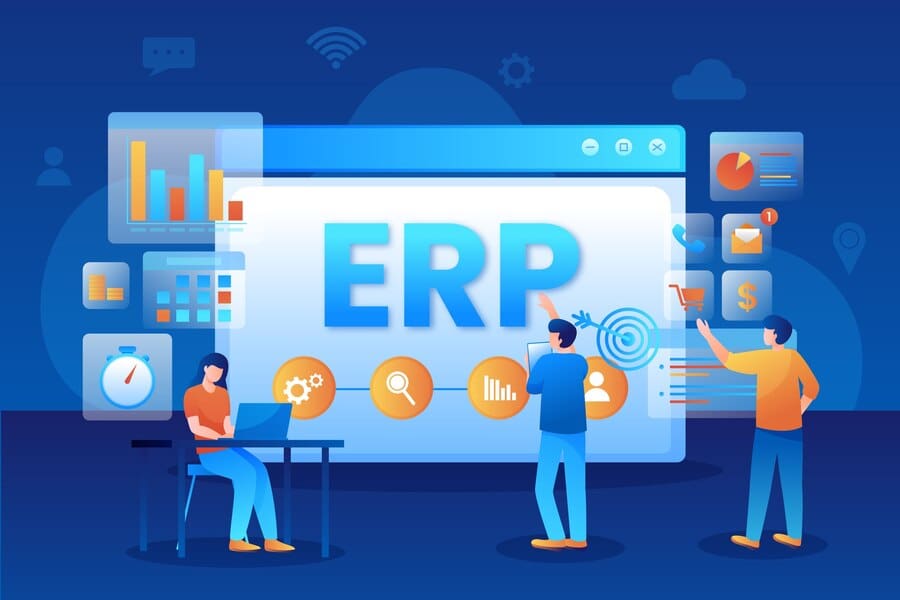
Enterprise management software (ERP) is like a smart housekeeper that helps organize all tasks from big to small in the business in a harmonious way. This software not only helps with financial tracking but also improves production processes, order management, and inventory.
Today’s ERP software such as SAP Business One, Oracle Netsuite, or Microsoft Dynamics 365 allows businesses to integrate various business processes, from finance to customer management, helping to create a more comprehensive and detailed view of the business’s situation. A significant advantage of ERP software is its flexible customization to suit the needs and size of each business.
Investing in ERP not only helps businesses reduce management lag but also improves productivity and optimizes operational processes. However, ERP implementation also requires commitment and patience from the business leadership team, to ensure that all employees can use the software effectively.
Cloud Computing Solutions
Cloud computing solutions are one of the most revolutionary technologies and are having a major impact on the way businesses do business today. Remind them to save on operating costs and scale resources flexibly. If you compare a business to a building, cloud computing is the solid foundation that helps that building reach higher and more solid in the face of market fluctuations.
Cloud computing helps small and medium-sized businesses save costs by replacing fixed costs such as servers, data storage, and system management with variable costs. Businesses will only have to pay for the resources they actually use. This creates a significant economic advantage, especially in the start-up stage.
Another important factor is flexibility in scale. Cloud computing allows businesses to easily scale up or down resources in line with market demand. Businesses can quickly deploy new services, upgrade, or change system configurations without major disruptions.
In addition, cloud computing also improves the user experience by minimizing latency and increasing access speeds. If an e-commerce business uses cloud services, customers will enjoy faster page load times, resulting in smoother shopping. Since then, it has been easier for businesses to retain customers in today’s fiercely competitive environment.
However, businesses also face some challenges when adopting cloud computing. High startup costs, information security issues, and a lack of professional skills are major barriers. Small and medium-sized businesses need to prepare a plan in advance and choose a reputable cloud service provider to ensure a successful implementation.
E-commerce platform
E-commerce is no longer a strange concept to small and medium-sized businesses, but has become an integral part of business strategy. An e-commerce platform is like a bridge to help businesses enter the online world from offline with countless opportunities and challenges.
Platforms such as Shopify, WooCommerce, and Sapo are popular choices for businesses that want to launch an online business. These platforms provide powerful tools that support everything from store creation, product management, orders, to analyzing customer data professionally.
One of the great advantages of e-commerce through this platform is its convenience and ability to reach global customers. No longer limited by geography, businesses can sell to any market if desired. In addition, advertising tools on e-commerce platforms such as Facebook Ads and Google Ads provide the ability to optimize marketing campaigns, thereby improving conversion rates and revenue.
However, participating in e-commerce also entails problems related to customer data management, information security and system operation costs. Platforms require certain skills to operate effectively, businesses need to invest in employee training to optimize the use of this platform.
IT Solutions
Technology trends transforming businesses
The digital era has ushered in many new technologies, changing almost the entire way businesses operate, especially in the field of information technology. Trends such as artificial intelligence (AI), automation, and the Internet of Things (IoT) have been playing an important role in transforming small and medium-sized businesses.
Applicability of Artificial Intelligence
Artificial Intelligence (AI) is like a bright light that illuminates a new and potential path for businesses. AI not only helps businesses optimize processes, but also improves customer experience and enhances competition in the market.
AI has the ability to automate repetitive processes, reduce workload for employees, and help save time. AI chatbots are used to handle customer service, answer questions quickly and efficiently, providing a better customer experience even when employees are not present.
AI is also capable of analyzing big data, helping businesses better understand customer behavior and needs. This is important for small businesses, when they don’t have enough manpower to analyze data manually. AI systems can provide accurate forecasts of sales, product demand, or market trends, helping businesses build more effective business strategies.
In the field of marketing, AI can optimize marketing by personalizing content and advertising for each customer. Through customer data analysis, AI helps businesses automate marketing campaigns, increase engagement, and convert into revenue.
Supply chain management is also an area where AI has great benefits. AI can forecast demand, optimize inventory, and minimize logistics costs, helping businesses maintain stable and efficient operations.
However, implementing AI is also not an easy thing for small businesses. Budget constraints, lack of professional knowledge and skills, and information security issues are major challenges. To overcome this difficulty, businesses need a clear strategy and commitment from leadership, along with support from technology experts.
Automation technology in the workflow
If you think of each business as a production line, automation technology is the powerful engine that helps everything run more smoothly and efficiently. Workflow automation not only boosts productivity, but also minimizes human intervention, improves accuracy, and reduces operating costs.
Some of the key technologies in automation include robotics, artificial intelligence, and robotic process automation (RPA). Not only do these technologies perform repetitive tasks quickly and accurately, but they also help minimize errors.
For example, automating the warehouse management process using robots can help with inventory counting, order processing, and delivery quickly without requiring a lot of manpower. This not only saves labor costs but also ensures that there are no errors in the warehouse management process.
In the manufacturing sector, RPA can take on difficult stages that previously had to depend on the skills of workers. This helps to improve product quality, minimize operating costs, and accelerate production schedules.
However, the implementation of automation technology also requires a large initial investment and thorough preparation. Small businesses often struggle to access capital to invest in modern automation systems. In addition, they also need to retrain employees so that they can take full advantage of new technologies.
Internet of Things (IoT) and business applications
The Internet of Things (IoT) is one of the cutting-edge technologies that offers a lot of potential for small and medium-sized businesses. IoT is like a neural system that connects all the smart devices in the business, creating a smart and synchronous network.
In business, IoT can be applied to many different fields such as tracking and managing inventory, improving production processes, and managing supply chains. Thanks to IoT, businesses can track the status of devices, machines, and products in real-time. This minimizes downtime and enhances productivity.
Another application of IoT is in the field of predictive maintenance. Instead of waiting for equipment to fail before repairs, businesses can use IoT sensors to monitor the condition of equipment and plan maintenance before it happens. This helps to save repair costs and maintain the continuous operation of the business.
However, small businesses often have difficulty deploying and integrating new IoT systems into existing technology infrastructure. In addition, the issue of information security when using IoT is also a big challenge. Businesses need to have a clear security strategy in place to ensure that data and devices are not compromised.

Technology trends transforming IT Systems
Consulting and technical support for SMEs
In the journey of digital transformation, small and medium-sized enterprises (SMEs) cannot do without support and advice from information technology (IT) service providers. Imagine IT service providers as professional companions to help businesses overcome challenges and unlock the potential of digitalization.
The role of IT service providers
IT service providers act as strategic consultants, accompanying businesses in implementing and maintaining information technology solutions. They are not merely technology partners but also make an important contribution to strategy building, risk management, and digital transformation consulting.
Some of the key roles of an IT service provider include:
- Provide customized solutions: To suit the needs and size of each business, IT service providers need to design customized technology solutions that fit the specific situation of each business.
- Support risk management: IT service providers help businesses minimize risks related to information security by applying optimal security measures to ensure data safety.
- Consulting on digital transformation: Digital transformation is an inevitable trend in the era of industry 4.0. IT service providers play an important role in advising and supporting businesses to carry out the digital transformation process effectively.
Support training and skill development for employees
Employees are a valuable asset of the business, training and developing skills for employees is like investing in the future of the business. Training not only helps to fill the current skills gap, but also prepares employees to face future changes and challenges.
Small and medium-sized businesses should identify training needs through employee surveys, performance reviews, and customer feedback. From there, they can build appropriate training programs, including online and traditional training, to suit a variety of learning styles. Companies can also partner with external organizations or industry experts to provide necessary skills training, such as data analytics, digital marketing, or software development.
Maintenance and post-deployment support services
When businesses deploy technology solutions, maintenance services and post-deployment support are indispensable to ensure that the system runs smoothly. Ongoing technical support does not stop at handling issues but also requires ongoing consultation to improve workflows and make changes in new technology.
Maintenance and support services can include troubleshooting, software upgrades, and training staff to use the system more effectively. Businesses also need advice from experts to ensure that the technology system is always updated and secure.
Conclude
Facing and solving IT challenges in small and medium-sized businesses is not an easy journey, but it is not impossible. By understanding the challenges, from lack of financial resources, human resources, technology adoption, to cybersecurity and data management, businesses can build specific and effective strategies.
To truly take full advantage of the potential of technology, businesses need to be carefully prepared in terms of resources and knowledge, constantly seeking support from experts and partners. Thereby, not only helping to optimize the operational process but also building a solid foundation to reach new opportunities, challenge revenue and competitiveness.
In today’s digital world, updating and timely applying technology solutions such as business management software, cloud computing, e-commerce platforms, along with the development of artificial intelligence and IoT will be the key to helping small and medium-sized businesses survive and develop sustainably.
This journey is not only the implementation of new technologies but also the commitment from the leadership along with the continuous efforts of the entire staff. With good preparation and determination, small and medium-sized businesses can overcome all challenges and achieve great successes in the digital era.
Contact Information for IT Systems Vietnam
IT SYSTEMS VIETNAM CO., LTD
IT Solutions – IT Department for Businesses
?? HOTLINE: 0283 9950 359
Email: contact@itsystems.com.vn
Website: https://itsystems.vn/
Facebook: https://www.facebook.com/ITSystems.VIETNAM
YouTube: https://www.youtube.com/@ITSYSTEMS
321/10 Phan Dinh Phung, Ward 15, Phu Nhuan District, Ho Chi Minh City.
House No. 22, Garden Villa, Vinh Hoang Urban Area, 431 Tam Trinh, Hoang Mai District, Hanoi.
Binh Duong Avenue, Phu Hoa, Thu Dau Mot, Binh Duong.
FAQ
When should a business ask IT Systems for support?
Ask for support when the issue affects users, business data, security, licensing compliance, service availability or daily operations. A short technical review often prevents repeated incidents and hidden costs.
Can IT Systems help review the current environment before proposing a solution?
Yes. IT Systems can review the current setup, identify risks, map the issue to the right service scope and recommend a practical next step for your business.
Does this topic connect to ongoing IT operations?
In most cases, yes. Problems around software, cloud, endpoint, network, backup or security should be connected to a broader IT operations plan instead of being handled as isolated incidents.
Need help applying this to your business?
IT Systems Vietnam can help assess the issue, recommend the right service path and support implementation for your team.