


In today’s fiercely competitive landscape, customer experience plays a pivotal role in determining a business’s success. However, many companies still struggle with personalizing the experience, resulting in decreased satisfaction and high customer churn rates. This article will delve into the root causes of this issue, analyze the serious consequences it entails, and most importantly, provide practical solutions and strategies for enhancing customer experience through effective personalization. We will also explore the indispensable role of technology in achieving this goal.
Deep-root Causes Behind Lack of Personalized Customer Experience

The lack of personalized customer experiences does not simply stem from a deficiency in technology or data. Many underlying factors correlate with the structure and management of businesses, creating difficulties in crafting memorable experiences for customers. Firstly, collecting and analyzing customer data is fundamental. Many businesses fail to carry this out thoroughly, leading to an inability to accurately identify the needs and wants of each customer. This occurs when there are shortcomings in establishing an appropriate technical infrastructure for data collection or when data is available but lacks analytical and evaluative skills.
Another significant issue is the complexity of product discovery processes. Many business websites have complex interfaces, requiring customers to perform numerous actions just to find information. This not only creates a sense of confusion but also diminishes customers’ motivation when they feel they are wasting time. Difficult-to-use interfaces are undoubtedly one of the issues many businesses need to address.
Limitations regarding modern technology such as AI and CRM are also essential reasons. Many small enterprises cannot allocate sufficient financial resources to these tools, leading to an inability to automate the personalization processes. When technology faces obstacles, businesses must rely on traditional methods, causing delays and inefficiencies.
Moreover, slow response times when addressing customer inquiries increase frustration. Modern customers expect speed and immediacy in all communications, and prolonged waiting can lead them to lose interest in a product or service.
Finally, a lack of consistent omnichannel strategy is another complex cause. Customers often become frustrated when they have to repeat information across different channels due to unsynchronized data systems. This reduces a seamless experience and negatively affects brand perception.
Overall, the lack of personalized customer experience stems from a combination of various technical, financial, and strategic factors. Businesses need to consider investing in modern technology and developing cohesive management strategies to effectively improve this situation.
Serious Consequences of Non-Personalized Customer Experience

Customer experience is a crucial part of any successful business strategy. However, the lack of personalization in customer experience can lead to numerous serious consequences, affecting not only customer satisfaction but also impacting business effectiveness and growth.
When the experience is not personalized, customers often feel overlooked, misunderstood, and neglected by the business. This easily leads them to switch to the services or products of competitors. The reason is simple: customers want to be treated as special individuals, with their unique needs and preferences understood. Due to this lack, the customer churn rate rises sharply, resulting in increased costs associated with attracting new customers.
Another serious consequence of lack of personalization is the decline in the effectiveness of marketing strategies. Marketing campaigns that do not address the true needs and wants of customers often perform poorly, leading to higher costs without achieving desired results. Consequently, the inevitable outcome is a drop in revenue. When customers do not feel valued, they tend to reduce their purchases, directly affecting total revenue and profits.
Furthermore, lacking an effective personalization strategy also poses challenges for business growth. Customer satisfaction and loyalty are not only factors that retain them but also the foundation for market share expansion and sustainable growth. Without accurate and effectively analyzed customer data, businesses will lack essential information to make crucial strategic decisions.
Finally, data security concerns are also becoming increasingly relevant. When customer data is not managed and secured properly, the risk of data breaches is high, leading to severe reputational and financial losses. To address this issue, businesses need to invest in security and ensure that their systems are robust enough to withstand cyberattacks.
In summary, although the personalization process may require significant investments of time and resources, the long-term benefits it brings to businesses are undeniable. Enhancing personalization in customer experience not only increases customer satisfaction but also supports businesses in achieving sustainable and stronger growth.
Disruptive Solutions: Improving Customer Experience through Personalization

In today’s digital age, personalizing customer experience is not only a trend but also a key factor that helps businesses maintain customer loyalty and satisfaction. To achieve this, a creative and flexible approach to implementing personalization solutions is needed.
One effective way to personalize is by deeply understanding customer insights. Analyzing customer data using AI technology helps businesses better grasp the behaviors, preferences, and needs of each individual. Segmenting customers based on consumption criteria provides opportunities to create tailored messages and special offers for each specific group, thereby increasing the level of interaction and loyalty to the brand.
Personalizing messages is also an important strategy. Based on identified behaviors and preferences, sending appropriate messages, offers, and promotions for each stage in the customer journey becomes easier. With AI support, creating quality advertising content tailored to each customer group not only enhances marketing effectiveness but also establishes a deeper connection with customers.
Implementing smart loyalty programs is also a groundbreaking solution. Earning points should not be limited to a single brand but can extend across multiple partner brands, allowing customers to flexibly use points at various places. Automating customer care processes through channels such as Zalo OA and email aids in managing customer relationships more effectively and intelligently.
Mobile technology plays a major role in providing optimal experiences anytime, anywhere. Developing mobile applications enhances the flexibility of service access, especially when combined with geofencing technology to deliver context-aware offers, thereby increasing customer engagement and satisfaction. You can refer to more about optimizing technological resources here.
Finally, to implement this effectively, building a professional customer care team is essential. Investing in highly skilled employees not only improves service quality but also reinforces customer trust in the brand. From the above points, it is clear that improving customer experience through personalization is a challenging task, but with disruptive solutions and advanced technology, it is entirely feasible and highly effective.
The Power of Technology: The Key to Personalized Customer Experience
In today’s business context, technology has become a decisive factor in helping businesses enhance customer experience. Applying technological advancements like Artificial Intelligence (AI), Augmented Reality (AR), Virtual Reality (VR), Customer Data Platforms (CDP), and the Internet of Things (IoT) not only improves satisfaction but also creates differentiation for the brand.
AI is at the forefront of understanding customer needs through analyzing behavioral and preference data. It enables the creation of personalized experiences such as product recommendations and customer care process automation. This not only saves time but also boosts conversion rates, creating a dual benefit for businesses. More uniquely, AR and VR provide interactive experiences, allowing customers to “touch” the product before making a purchase decision. This not only helps reduce impulsive buying decisions but also enhances trust in the brand.
An indispensable element in the personalization process is the CDP. This platform helps gather and analyze data from various sources, allowing businesses to gain deeper insights into their customers. By building detailed and continuously updated customer profiles, CDPs optimize marketing campaigns and enhance communication effectiveness between the brand and consumers.
Moreover, IoT opens up a new horizon for understanding customer behavior and needs. Smart connected devices can continuously gather data, helping businesses make more informed decisions regarding the personalization of services and products. This not only satisfies current customers but also attracts potential customer groups.
Personalized customer experience is not just a temporary trend but has become a vital foundation for sustainable business development. Leadership, especially positions like CXO, plays a key role in implementing technology and enhancing customer experiences at every touchpoint. From offline to online, technology ensures consistency and service quality, creating memorable moments for customers. To learn more about implementing AI in personalization, you can refer to training AI models with real data.
In summary, smart and effective application of technology is the key to enhancing customer experience, thereby establishing a strong relationship between brands and customers.
Building Development Strategies to Elevate Personalized Customer Experience
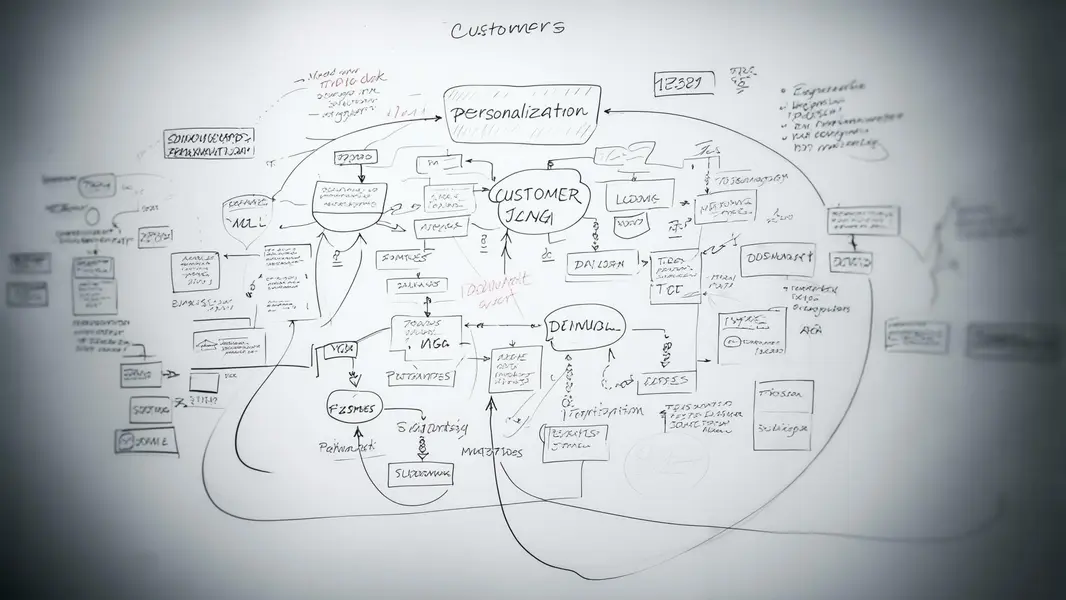
Building a development strategy to enhance personalized customer experience has become an urgent need for businesses today, rather than just an option. As customer demands and standards continue to rise, personalizing experiences not only helps businesses stand out but also creates differentiation to attract and retain customers.
The first step in establishing a comprehensive development strategy is to personalize the customer journey from the first moment they become aware of the brand until they become loyal customers. To do this, businesses need to use data and technologies such as AI and Machine Learning to analyze customer behaviors and preferences. This not only aids in predicting needs but also helps create unique interactions tailored to each customer. Companies like Spotify and Netflix have successfully demonstrated the use of technology to personalize customer experience through curated music playlists or personalized movie covers.
Optimizing the customer journey is a key factor. It includes understanding and effectively addressing customer needs at each touchpoint. Businesses need to keep the customer at the center of every decision and leverage technology to flexibly adjust these small but meaningful transitions in the customer journey. Simultaneously, integrating cross-platform loyalty programs can maintain customer motivation, encouraging them to return and continue engaging with the brand.
A solid development strategy must include continuous measurement and improvement. Metrics like NPS, CSAT, and CES help businesses track customer feedback and implement relevant improvements. Combining human factors with automation is also crucial in creating impressive customer experiences. AI chatbots can promptly assist customers while direct support services through hotlines or emails ensure timely personalized attention for customers.
Finally, building a personalization strategy must respect customer privacy rights. Businesses must be transparent in collecting and using data, complying with privacy regulations such as GDPR or CCPA, to build trust with customers. This not only ensures the safety of personal information but also enhances customer satisfaction and loyalty.
Final Thoughts
In the digital age, personalized customer experience is not just a competitive advantage but a vital factor for survival. By understanding the causes of the lack of personalization, evaluating the consequences, and applying appropriate technological solutions, businesses can create unique experiences that enhance customer satisfaction and loyalty. Investing in personalization is investing in the sustainable growth of the business.
Contact IT Systems Vietnam for inquiries.
Learn more: https://itsystems.vn/
About Us
IT SYSTEMS VIETNAM CO., LTD
IT Solutions – IT Department for Enterprises
☎️ HOTLINE: 0283 9950 359
Email: contact@itsystems.com.vn
Website: https://itsystems.vn/
Facebook: https://www.facebook.com/ITSystems.VIETNAM
Youtube: https://www.youtube.com/@ITSYSTEMS
321/10 Phan Đình Phùng, Ward 15, Phu Nhuan District, Ho Chi Minh City.
House No. 22, Garden Villa, Vinh Hoang Urban Area, 431 Tam Trinh, Hoang Mai District, Hanoi.
Binh Duong Avenue, Phu Hoa, Thu Dau Mot, Binh Duong.
FAQ
When should a business ask IT Systems for support?
Ask for support when the issue affects users, business data, security, licensing compliance, service availability or daily operations. A short technical review often prevents repeated incidents and hidden costs.
Can IT Systems help review the current environment before proposing a solution?
Yes. IT Systems can review the current setup, identify risks, map the issue to the right service scope and recommend a practical next step for your business.
Does this topic connect to ongoing IT operations?
In most cases, yes. Problems around software, cloud, endpoint, network, backup or security should be connected to a broader IT operations plan instead of being handled as isolated incidents.
Need help applying this to your business?
IT Systems Vietnam can help assess the issue, recommend the right service path and support implementation for your team.


