


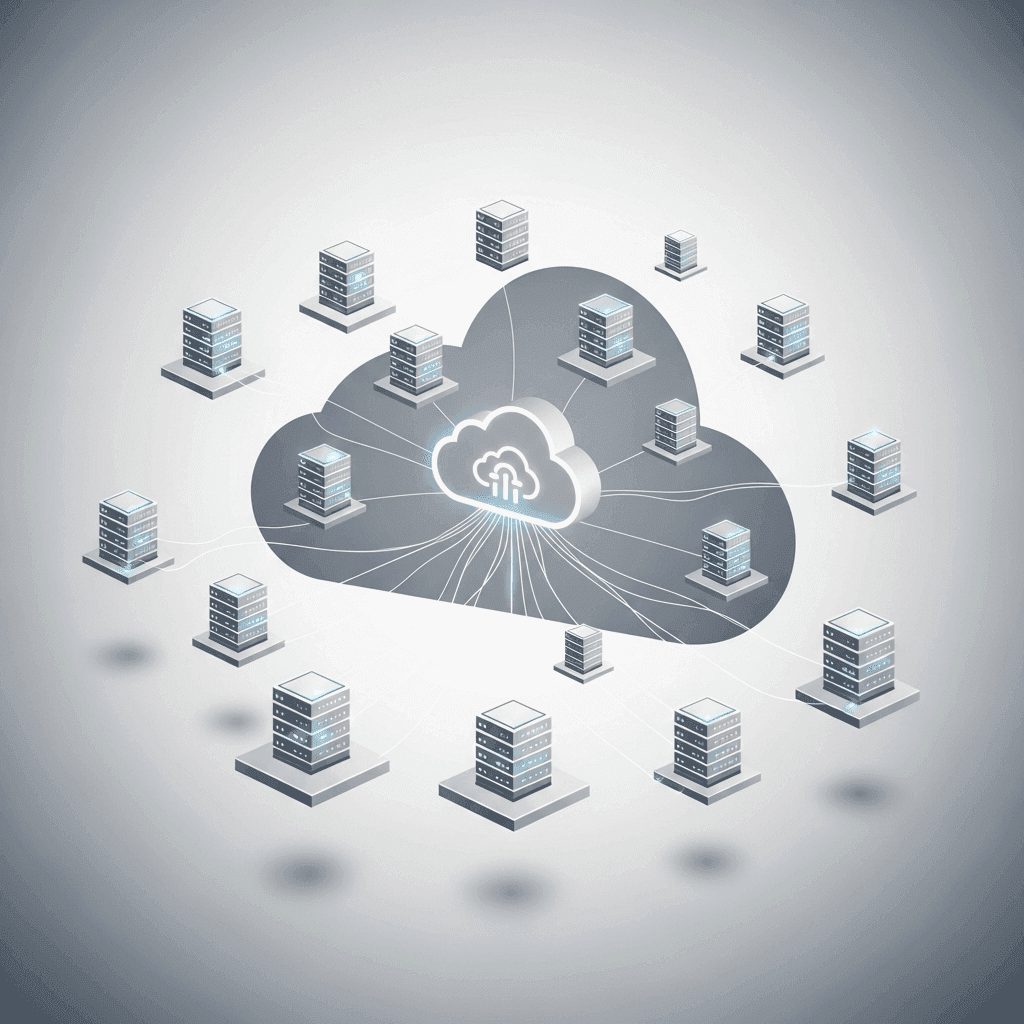
Cloud server is becoming a breakthrough technology solution for Vietnamese manufacturing enterprises, especially SMEs facing challenges with infrastructure costs and production disruptions. In the context of Industry 4.0 digital transformation, selecting the right IT infrastructure not only optimizes costs but also ensures continuous operations, minimizing downtime – the biggest nightmare in the manufacturing industry.
Compared to the traditional on-premise model that requires large initial CAPEX investments, renting cloud servers offers a flexible OPEX model where businesses only pay for the resources they actually use. This is particularly important for manufacturing SMEs with fluctuating demands due to seasonal variations or sudden orders. With VMWARE virtualization technology and high-end DELL EMC servers, the cloud server service ensures superior performance, instant scalability, and 99.99% SLA uptime.
The biggest challenge for manufacturing enterprises is continuity. One minute of downtime can cause millions in losses, affecting production lines, delaying deliveries, and eroding customer trust. Cloud servers solve this comprehensively through automatic backup systems, professional disaster recovery, and 24/7 monitoring. Businesses no longer worry about hardware failures, system upgrades, or lacking specialized IT staff.
According to Gartner research, 85% of manufacturing enterprises will shift to hybrid cloud by 2025. In Vietnam, this trend is even more pronounced as SMEs recognize the dual benefits: controlling sensitive data on-premise combined with cloud scalability. Hybrid IT solutions not only reduce TCO by 40-60% but also boost ROI through ERP/MES automation and real-time data analytics.
IT Systems – Vietnam’s leading provider of cloud server services – is committed to partnering with manufacturing enterprises with a comprehensive managed service model. From consulting and deployment to 24/7 operations, we ensure IT infrastructure becomes a growth driver rather than a cost burden. With experience serving hundreds of manufacturing SMEs, IT Systems understands every pain point and delivers the most optimal solutions.
In this article, we will deeply analyze the differences between cloud servers and on-premise, evaluate real TCO, point out 3 deadly mistakes SMEs often make, and propose an optimal hybrid IT strategy. Especially, you will understand how cloud servers help Vietnamese manufacturing enterprises compete globally without massive infrastructure investments.
1. Introduction: Defining the Technology Platform
Cloud Servers not only provide benefits in deployment speed and scalability but also help businesses optimize costs flexibly. Powerful DELL EMC server systems combined with leading VMWARE virtualization technology allow easy hardware upgrades. Flexible pay-per-use costs mean businesses only pay for resources used, maintaining performance without excessive upfront investments.
In contrast, On-Premise Solutions require higher initial investments but offer complete control over technology infrastructure and data. Manufacturing enterprises, which have high data security needs and specific system management requirements, may prefer this option to minimize downtime risks. This is especially critical when production processes cannot be disrupted by technical issues.
2. Core Problems of Manufacturing SMEs: Downtime and Hidden Cost Challenges
One of the core issues manufacturing SMEs face is production disruptions due to downtime. When systems go offline, production lines and supply chains are immediately negatively impacted. This not only reduces productivity but also risks delivery delays, damaging business reputation.
Downtime costs can be quantified using a per-minute downtime cost formula, helping SMEs better understand real losses. This goes beyond financial damage, affecting employee morale and customer trust. Understanding these costs is essential to propose measures to mitigate their impact.
Additionally, businesses must note hidden cost risks from over-relying on a single IT staff member. Lacking personnel for data recovery can lead to severe data loss. Flexibility in data and system management is crucial for ensuring business stability and sustainability against unforeseen challenges. Reality shows, Rang Dong: AWS Cloud x2 revenue, IoT production scale. Hanoi SMEs: Cloud ERP TCO giảm, efficiency +.
3. TCO (Total Cost of Ownership) Analysis and Long-term ROI
Comparing OPEX and CAPEX cost models: For manufacturing enterprises, choosing between Cloud Servers and On-premise goes beyond convenience or security; it requires a deep look at Total Cost of Ownership (TCO). Cloud Servers represent an OPEX model where businesses pay only for used resources, with costs varying by business needs for financial flexibility. In contrast, On-premise requires large CAPEX for infrastructure purchases, creating short-term financial burdens but offering absolute control.
Hidden maintenance and hardware/software upgrade costs: On-premise systems often hide ongoing maintenance and upgrade costs. Businesses need specialized personnel for upkeep and troubleshooting, which can divert focus from core production activities. Meanwhile, IT Systems’ Cloud Servers require no hardware maintenance, with software upgrades being easy and nearly instantaneous, allowing businesses to focus on production.
Evaluating optimal environments for core production software (ERP/MES): When selecting environments for production software like ERP/MES, Cloud Servers are often preferred for manufacturing enterprises due to scalability and easy integration with existing systems. This minimizes downtime and ensures production continuity. On-premise may face scalability limits and more complex management.
4. SLA, Monitoring, and System Recovery Capabilities (DR)
Service Level Agreement (SLA) is a deciding factor for maintaining continuous enterprise system operations. Especially in manufacturing, an SLA with 99.99% uptime and tight recovery time objectives (RTO/RPO) is foundational to prevent disruptions. This is an inevitable trend as manufacturing enterprises choose between cloud server and on-premise solutions to limit downtime.
Operational factors like monitoring, logging, and incident management processes (ITSM) play key roles in system optimization. Continuous monitoring and specific log management not only detect potential issues early but also enable quick incident resolution, enhancing IT system reliability.
For Backup & Disaster Recovery (DR) requirements, establishing robust DR systems is essential to protect production data from emergencies. This becomes even more critical as manufacturing enterprises weigh building on-premise backup systems against cloud solutions to ensure recovery capabilities and production continuity.
5. 3 Common Mistakes SMEs Make When Choosing IT Infrastructure
Mistake 1: Calculating costs as ‘buy once, use forever’ (ignoring OPEX and TCO). Many manufacturing enterprises focus only on initial CAPEX when investing in IT infrastructure, overlooking OPEX and TCO. This leads to systems quickly becoming obsolete, unable to meet growing demands, causing unwanted downtime. To address this, enterprises should use TCO analysis including maintenance, upgrades, and technology refresh costs. This optimizes resources and avoids unnecessary financial waste.
Mistake 2: Over-relying on On-premise or being overly optimistic about self-managing Cloud. Manufacturing enterprises often get stuck choosing between On-premise and Cloud without properly assessing their capabilities and needs. On-premise offers direct control but demands significant resources for management and maintenance. Conversely, while Cloud provides flexible scaling and cost savings, without effective management strategies, security and downtime risks remain high. Thus, weighing self-management capabilities against outsourcing IT support services is essential for system continuity and stability.
Mistake 3: Not investing in data recovery testing (Test Restore). Technology always carries risks, and not regularly testing data recovery is a major vulnerability for manufacturing enterprises. Recovery testing simulates incidents to evaluate system response and ensure critical data can be fully and quickly restored. This not only minimizes damage during incidents but also improves security processes and enhances system resilience against unexpected events.
6. Optimal Decision-Making Strategy and Hybrid IT Model
In optimizing IT infrastructure, the Hybrid IT model becomes an ideal solution helping manufacturing enterprises combine sensitive data processing and production applications. Choosing between Cloud Servers and On-premise is not just about technology but also operational strategy and system reliability. Hybrid IT offers high flexibility, securing sensitive data while leveraging Cloud advantages for rapid application and service scaling.
When deciding to upgrade On-premise infrastructure or fully migrate to Cloud, enterprises must carefully evaluate key factors like long-term costs, security, and specific business needs. On-premise provides comprehensive data control, while Cloud excels in flexibility and minimizing operational disruptions. Enterprises should consider hybrid strategies to maximize efficiency and data protection.
Outsourcing Managed Cloud Server services is also a smart solution at specific times. When lacking internal staff or capabilities to manage systems, outsourced services provide professional support, optimizing operations and reducing internal staff dependency. This ensures smooth system performance while saving costs and focusing resources on core activities.
7. Call to Action: Ensure Uptime and Optimize TCO with IT Systems
Measurable value commitment: IT Systems’ Cloud solution effectiveness stands out with dramatic operational cost (TCO) reductions over a specific period, while ensuring 99.99% uptime per Service Level Agreement (SLA). This stability meets manufacturing enterprises’ needs for continuous operations without disruption fears, directly impacting revenue and production processes.
Resource scaling/shrinking capabilities: A standout advantage of IT Systems’ Cloud solution is scaling resources up or down in under 5 minutes. This provides maximum flexibility for manufacturing enterprises, easily adapting to market changes or production demands without large upfront investments, minimizing financial risks.
Encouragement to contact IT Systems: With such outstanding benefits, enterprises needing to optimize IT infrastructure and ensure performance and stability should contact IT Systems for effective Managed Cloud Server consulting and deployment. Support from IT Systems’ expert team promises optimal solutions tailored to every scale and manufacturing specifics.
FAQ
When should a business ask IT Systems for support?
Ask for support when the issue affects users, business data, security, licensing compliance, service availability or daily operations. A short technical review often prevents repeated incidents and hidden costs.
Can IT Systems help review the current environment before proposing a solution?
Yes. IT Systems can review the current setup, identify risks, map the issue to the right service scope and recommend a practical next step for your business.
Does this topic connect to ongoing IT operations?
In most cases, yes. Problems around software, cloud, endpoint, network, backup or security should be connected to a broader IT operations plan instead of being handled as isolated incidents.
Need help applying this to your business?
IT Systems Vietnam can help assess the issue, recommend the right service path and support implementation for your team.


