


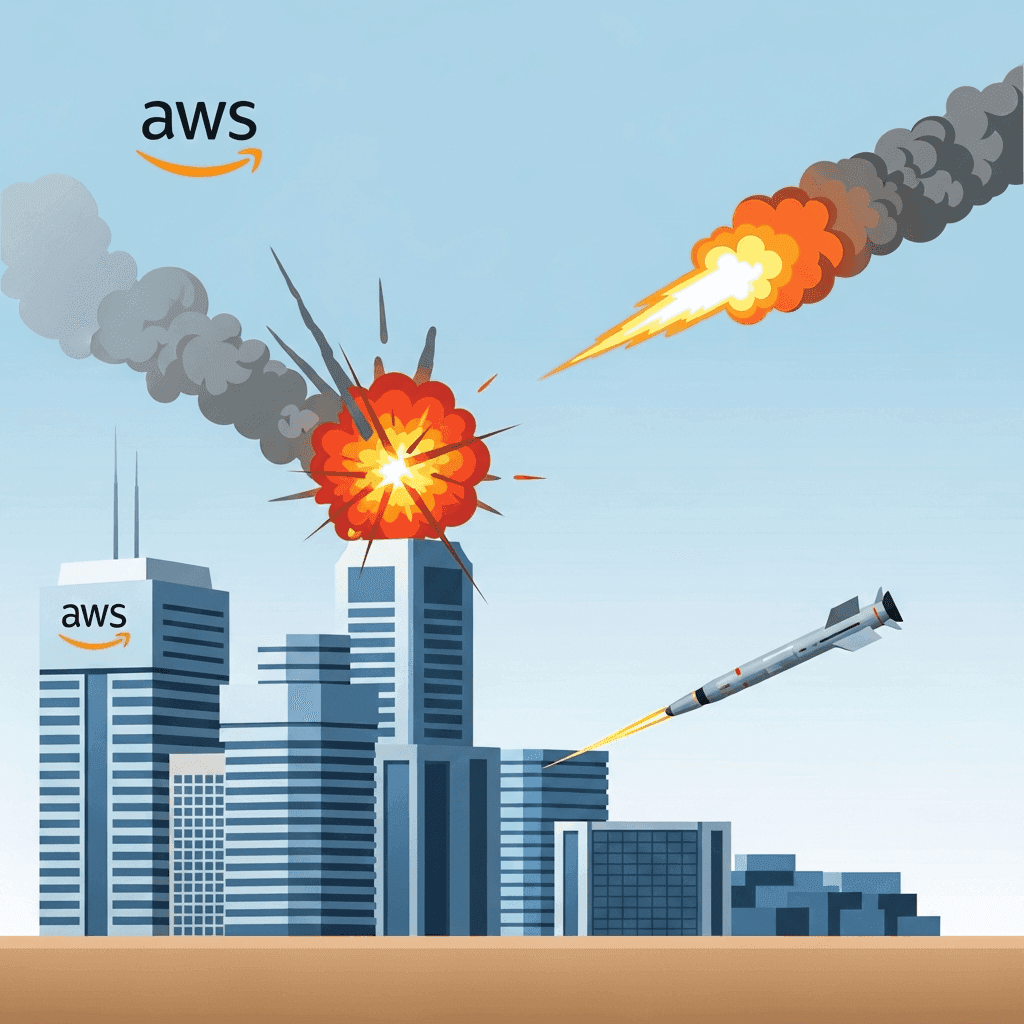
AWS Bahrain Data Center Attacked: Shocking Event in the Middle East
The AWS Bahrain data center attack by missiles from Iran has shaken the tech world, causing severe damage to Amazon Web Services (AWS) cloud computing infrastructure. According to reliable sources from the Financial Times and confirmation from Bahrain’s Ministry of Interior, the incident occurred in early April, marking the first time a major commercial data center has been directly targeted amid escalating geopolitical conflicts. This event not only affects operations in Bahrain but also raises major questions about security for the entire AWS Middle East system.
Context of Tensions Leading to the Iranian Missile Attack
The AWS Bahrain data center attack took place amid exploding U.S.-Israel-Iran tensions spilling over into civilian tech infrastructure. Iran, through the Islamic Revolutionary Guard Corps (IRGC), publicly threatened U.S. tech giants like Amazon, Microsoft, Google, and Apple operating in the Middle East just one day prior. These warnings were issued via Iranian state media channels, emphasizing targeting symbols of Western economic influence.
Prior to the incident, the region had seen similar events. Just weeks earlier, on March 2, Amazon reported physical issues at two data centers in the UAE and one in Bahrain due to drone (UAV) attacks. These incidents reflect a new trend: traditional conflicts are expanding into digital space, where data becomes a strategic asset. For example, in the Russia-Ukraine war, cloud infrastructure was indirectly targeted through DDoS attacks and physical sabotage, causing global service disruptions.
Immediate Impact of the Attack
A fire broke out at the AWS facility in Bahrain after the Iranian missile attack hit its target, forcing local firefighters to intervene urgently. Although Bahrain confirmed the fire was controlled, the extent of hardware, data, and recovery time damage remains secret. Experts estimate that even one hour of disruption could cost millions of dollars for businesses reliant on these services.
Responses from Involved Parties
Amazon Web Services has remained completely silent, refusing to comment on the incident, consistent with its information security policy. AWS representatives only emphasized their commitment to high availability for customers but did not disclose remediation details. Meanwhile, the Bahrain government publicly condemned the “external aggression,” alluding to Iran without naming it directly, and pledged to enhance protection for strategic facilities.
International organizations like the United Nations and the U.S. are closely monitoring. The U.S. State Department expressed concerns about security for American citizens and assets in the region, while cybersecurity experts warn of escalation risks into hybrid warfare, combining physical and cyber attacks.
Strategic Importance of AWS in Bahrain and the Middle East
AWS Middle East was launched by Amazon in July 2019, with Bahrain being the first region to feature three Availability Zones (AZs) – independent data centers ensuring low latency and 99.99% availability. This facility serves thousands of businesses, banks, governments, and public services in West Asia, from Saudi Arabia to the UAE. Bahrain was selected for its central location, business-friendly environment, and attractive tax incentives.
The role of this center is the “digital backbone” for the region. For instance, major banks like the National Bank of Bahrain use AWS for real-time transaction data storage, while oil companies like Aramco rely on it for big data analytics. A disruption like the AWS Bahrain data center attack could trigger a domino effect: app connectivity loss, payment processing delays, even impacts on healthcare and smart transportation systems.
To illustrate, consider the 2021 AWS Ohio outage due to extreme weather, which paralyzed Netflix and Disney+ services. In Bahrain, impacts could be more severe due to high cloud dependency and geopolitical risks. Multinational enterprises like Emirates Airlines or Dubai fintech startups may need to shift to other AZs, increasing costs and latency.
- Benefits of AWS Bahrain: Latency under 10ms for local users, support for AI/ML and data storage compliant with GDPR equivalents.
- Potential Risks: Physical attacks could destroy server racks, leading to permanent data loss without multi-region backups.
- Contingency Solutions: AWS recommends Multi-AZ and Multi-Region deployments to mitigate risks.
Greater Risks and Lessons for the Future
The incident underscores that digital assets are now legitimate military targets in the eyes of some nations. The Iranian missile attack is not just a military action but a strategic message aimed at weakening the Middle East’s digital economy – a region projected to reach $500 billion in value by 2025 per McKinsey reports. Tech companies need to invest heavily in physical security, such as bunkerizing servers and missile defense systems, similar to how Google protects data centers in Israel.
For Vietnamese and Asian businesses expanding into the Middle East, the lesson is to diversify cloud providers (AWS, Azure, Google Cloud) and prioritize more stable regions like Singapore or Japan. Governments should also build strategies to protect critical infrastructure, combining technology and diplomacy.
In summary, the AWS Bahrain data center attack is a wake-up call for a new era where the cloud is no longer “invisible” but a real battlefield. Swift recovery will demonstrate AWS’s resilience, but geopolitical risks will continue to challenge the global tech industry.
FAQ
When should a business ask IT Systems for support?
Ask for support when the issue affects users, business data, security, licensing compliance, service availability or daily operations. A short technical review often prevents repeated incidents and hidden costs.
Can IT Systems help review the current environment before proposing a solution?
Yes. IT Systems can review the current setup, identify risks, map the issue to the right service scope and recommend a practical next step for your business.
Does this topic connect to ongoing IT operations?
In most cases, yes. Problems around software, cloud, endpoint, network, backup or security should be connected to a broader IT operations plan instead of being handled as isolated incidents.
Need help applying this to your business?
IT Systems Vietnam can help assess the issue, recommend the right service path and support implementation for your team.


