


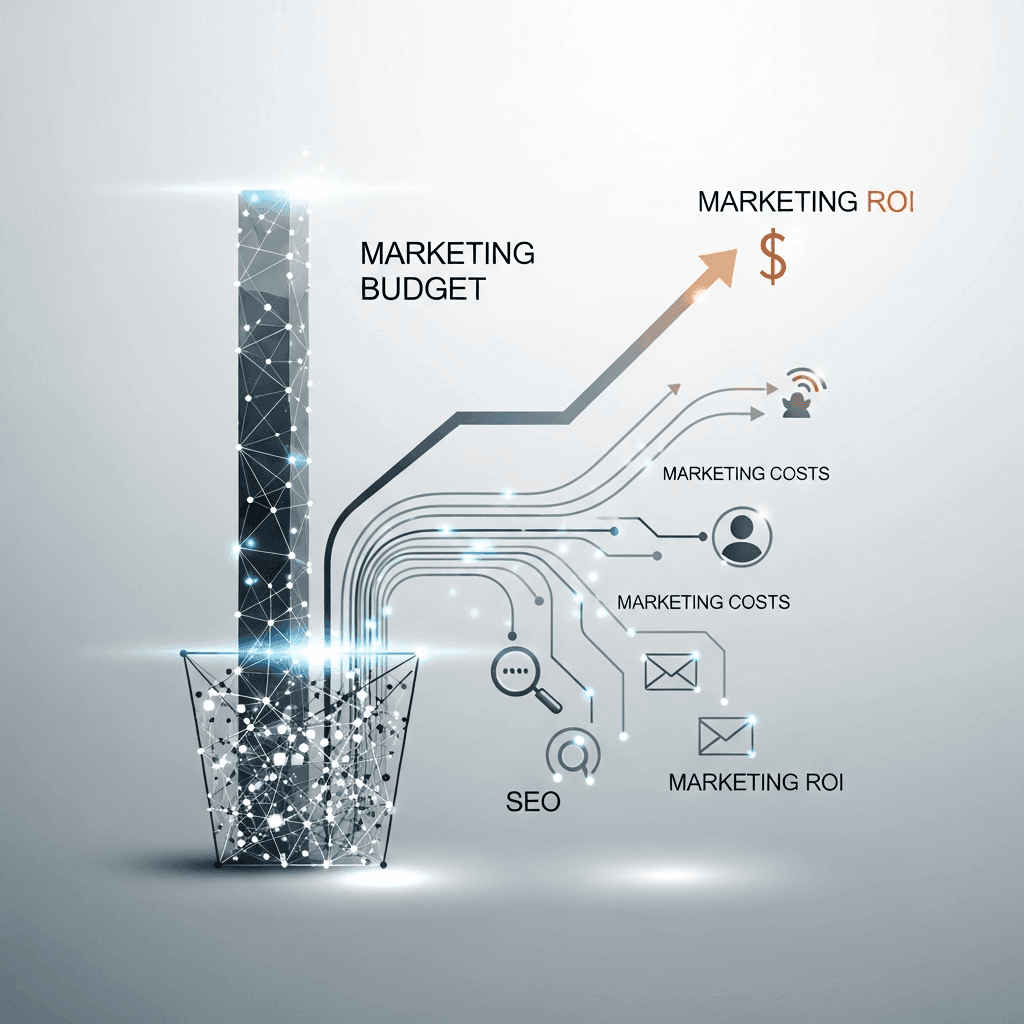
Marketing cost is becoming a major burden for businesses in the digital age, especially as advertising platforms continuously raise prices and competition intensifies. To effectively control marketing budgets, implementing AI Agents has emerged as a strategic solution to automate processes, optimize resource allocation, and enhance marketing ROI. However, many businesses struggle to estimate the total associated costs, leading to budget overruns or mid-project failures.
AI Agents not only support real-time customer data analysis but also predict trends and personalize campaigns, thereby minimizing waste in traditional marketing costs. According to industry reports, businesses applying AI can save up to 30% on their marketing budget by automating repetitive tasks like ad management, audience segmentation, and content optimization. But to achieve this, it’s crucial to understand the cost components, from software licenses and system integration to ongoing maintenance.
In this context, analyzing the Build vs. Buy vs. Hybrid models becomes essential to balance CAPEX and OPEX, ensuring flexibility for a fluctuating marketing budget. Simultaneously, businesses must assess when not to invest, avoiding risks from poor-quality data or chaotic processes. Hidden costs like API escalation or infrastructure upgrades often cause project budgets to swell, requiring a precise marketing ROI calculation framework with TCO, Payback Period, and a distinction between Cost Saving vs. Revenue Uplift.
A phased implementation roadmap – from Business Case and Pilot to expansion – helps tightly control marketing costs. Finally, an approval checklist for CEOs emphasizes KPIs like NPV and IRR to ensure the project delivers sustainable value. This article will analyze each aspect in detail, providing a comprehensive view to help you make smart investment decisions. AI Agent services for businesses can be the key to supporting a smooth implementation.
With the support of cloud technology and flexible platforms, marketing cost is no longer a barrier but a lever for growth. Let’s explore how to optimize it to achieve outstanding marketing ROI.
1. Breakdown of marketing cost components when implementing an AI Agent
License Cost: Using AI Agents requires software licenses, necessitating business expenditure on necessary permits. This includes additional costs for software updates and upgrades to ensure the AI Agents operate effectively and securely.
API and Cloud Platforms: Deploying AI Agents on a cloud platform helps optimize costs and scalability. Businesses can choose from various flexible payment models, from monthly subscriptions to pay-as-you-go, to minimize fixed costs.
Integration Cost with Existing Systems (ERP, CRM): Integrating AI Agents with existing systems like ERP or CRM is essential to optimize business processes. Integration costs can be high depending on the complexity and customization requirements of the current system.
Data Preparation, Cleaning, and Governance Cost: For AI Agents to function effectively, input data must be carefully prepared and managed. This requires stable resources to ensure data accuracy and consistency, thereby maximizing the benefits of AI.
Recruitment and Training Cost for Specialized Personnel: Businesses need to invest in recruiting and training AI specialists to manage and operate the system. This is a decisive factor for the performance and competitiveness of the AI Agent within the enterprise.
Security, Compliance, and Legal Costs: Using AI Agents requires businesses to strictly adhere to security standards and legal regulations. This is not only to protect data but also to avoid legal and idiosyncratic compliance risks.
Operation, Maintenance, and Continuous Optimization Cost: To maintain stable performance and stay updated with the latest technological improvements, businesses need to continuously invest in the maintenance and optimization of the AI Agent system. This not only enhances performance but also extends the lifespan of the AI systems in use.
2. Build vs. Buy vs. Hybrid: Analyzing cost models and strategic benefits
In-house Build Model: CAPEX and Control involves building the IT system in-house, with resources and costs heavily concentrated on initial investment (CAPEX). Businesses will need to allocate budgets and plan meticulously to fully manage and maintain their own systems. This ensures maximum control over implementation and security but requires significant ongoing resources and management costs.
Off-the-shelf (SaaS) Model: OPEX and Speed of Deployment is demonstrated by using Software as a Service (SaaS), where businesses only pay operating expenses (OPEX) without worrying about physical infrastructure. This offers the benefit of rapid deployment and allows a focus on core business activities.
Hybrid Model: Optimizing between Cost and Customization takes the advantages of both models, allowing businesses to customize the mix of cloud solutions and traditional infrastructure. By balancing costs (CAPEX and OPEX), this model optimizes flexibility and cost control.
Comparing Total Cost of Ownership (TCO) and flexibility of each model is crucial. Evaluating the TCO between the build, buy, and hybrid models shows that businesses need to weigh short-term costs against long-term strategic benefits to choose the optimal solution that fits their development needs and market fluctuations.
3. When should a business not invest in an AI Agent?
Data fragmentation, poor quality, and insufficient quantity can be major reasons why a business should not yet invest in an AI Agent. When data is not collected and managed systematically, the quality and volume of information will be inadequate for making accurate judgments, reducing the effectiveness of the AI Agent. This is particularly important for businesses wanting to fully leverage AI technology.
Furthermore, in the context of chaotic and unstandardized business processes, applying an AI Agent can lead to undesirable results. An unsystematic process will cause the AI to make irrelevant or ineffective decisions, harming overall business operations. Conversely, a clear and organized operational process provides a solid foundation for a successful AI implementation.
Another factor to consider is business scale. If the business is not large enough to see a clear ROI, investing in an AI Agent can be wasteful. Larger enterprises often have the financial and human resources to leverage AI more effectively, while smaller businesses may not see benefits commensurate with the costs.
Without a suitable technical team to operate and maintain it, implementing an AI Agent can face many difficulties and potential risks. The inability to handle errors or perform timely maintenance can severely affect the continuous operation of the information system. Therefore, having a dedicated IT team ensures the AI operates smoothly and stably.
Finally, if the ROI forecast does not meet leadership’s expectations, the business should reconsider the decision to invest in an AI Agent. The investment must bring tangible benefits and exceed profit expectations for leadership to approve and execute it. A clear analysis of expenses and a careful evaluation of financial effectiveness are crucial steps before deciding to use an AI Agent in the business.
4. Hidden costs that cause AI projects to go over budget and fail
Escalating costs when API/data usage surges unexpectedly: During AI project implementation, businesses often fail to anticipate that API traffic can increase suddenly. This can lead to operating costs exceeding the budget, especially if the company lacks timely monitoring or warning mechanisms.
Unforeseen technology infrastructure upgrade costs: As AI projects expand, the demand for bandwidth and data processing capabilities also increases. Businesses may face infrastructure shortfalls, leading to costs for upgrading servers or cloud services to ensure uninterrupted operations.
Incidental technical personnel recruitment costs: Implementing AI requires a technical team with highly specialized skills. Many businesses face recruitment and training costs that were not in the initial plan, due to the specific skills AI demands.
Legal consulting and compliance costs for new regulations: Increasingly strict data and security regulations can create financial pressure for businesses implementing AI. Investment in legal consulting is necessary to ensure compliance with the latest regulations, avoiding potential legal risks if policies and procedures are not updated in time.
Disruption and internal operational process change costs: Integrating AI into existing business processes can disrupt normal operations, leading to additional costs. To minimize this, businesses need to plan for process changes reasonably, ensuring the transition is smooth and effective.
5. Framework for calculating ROI and core financial metrics for AI projects
The ROI formula is widely used in AI projects to measure investment efficiency, typically using the formula (Net Benefit / Total Investment Cost) x 100%. This helps businesses get an overall view of the value the AI project brings compared to the costs incurred, supporting data-driven decision-making.
Meanwhile, Total Cost of Ownership (TCO) includes all costs from implementation to operation. This is a critical metric for understanding the long-term expenses associated with an AI project, including hidden costs that may not have been initially anticipated.
Payback Period determines when the project starts generating profit, which is the time required to recover the initial investment. This is a core indicator that helps businesses assess whether the project can meet its financial goals.
When considering the benefits of an AI project, it is necessary to distinguish between Cost Saving and Revenue Uplift. Cost saving allows businesses to reduce regular expenses, while revenue uplift aims to increase income through new channels or by optimizing existing ones.
Finally, quantifying AI’s impact on business indicators such as profit and the P&L (Profit & Loss) statement helps businesses better understand AI’s role in improving financial factors, thereby clarifying how AI contributes to the company’s sustainable growth.
6. Phased AI Agent implementation roadmap to control the budget
Phase 1: Estimate Total Cost of Ownership (TCO) and build a Business Case. In this first step, the most important task is to determine the Total Cost of Ownership (TCO) of the AI Agent solution. This gives the business a clear view of license fees, technology integration, and long-term operational costs. Building a specific Business Case not only serves to persuade stakeholders but also provides a basis for evaluating investment effectiveness in subsequent steps.
Phase 2: Implement a Pilot on a small scale with a narrow scope. After creating the Business Case, proceed with a pilot implementation of the AI Agent solution with a small, limited scope. This helps test the feasibility and effectiveness of the solution before a full-scale rollout. A pilot provides an opportunity for the business to adjust and optimize while controlling risks and incurred costs.
Phase 3: Measure actual ROI and financial metrics from the pilot project. Once the pilot is complete, the business needs to measure the Return on Investment (ROI) and other key financial indicators. This step helps determine the success level, economic efficiency, and real-world impact of the AI Agent solution. The collected data will serve as a reliable basis for analysis, changes, or continuing the implementation plan.
Phase 4: Make expansion decisions based on data and payback threshold. Based on the measured data, the business can decide whether to expand the AI Agent project. A critical factor to consider is the payback threshold – a key point to ensure that expansion will not cause financial loss but, on the contrary, will yield higher profits.
Phase 5: Optimize and scale successful initiatives. Finally, for initiatives that have been proven effective, optimization and scaling become a priority. This ensures that tested methods and processes are applied on a larger scale while maintaining stability, combined with new improvements to sustain a competitive edge.
7. Investment approval checklist for CEOs and leadership
First, determining the TCO for the AI Agent project over 3-5 years is crucial. TCO includes all costs from implementation to operation, so a detailed assessment will help the business manage its budget more effectively. This must be thoroughly checked to ensure the company’s financial capacity is ready.
The expected Payback Period is also an essential factor. A successful AI Agent project must be able to pay back its investment in the shortest possible timeframe, helping the business quickly recoup its capital and start generating profit. A short payback period will increase the project’s appeal to management.
In addition, financial KPIs such as ROI, NPV, and IRR need to be clearly defined. These indicators will help the CEO and leadership evaluate the project’s effectiveness compared to other investment opportunities. A high ROI, positive NPV, and satisfactory IRR will be positive signs for the project.
Once the financial indicators are determined, developing a risk management plan for financial, technological, and operational aspects is an indispensable step. This plan should outline how to handle potential risks and provide contingency measures, ensuring the AI Agent project operates smoothly and effectively.
Finally, building a roadmap for expansion and reinvestment is necessary for the AI Agent project to develop sustainably. This involves not just reinvesting profits but also having a detailed plan to optimize the project’s long-term value, which is decisive in scaling or integrating new features when needed.
FAQ
When should a business ask IT Systems for support?
Ask for support when the issue affects users, business data, security, licensing compliance, service availability or daily operations. A short technical review often prevents repeated incidents and hidden costs.
Can IT Systems help review the current environment before proposing a solution?
Yes. IT Systems can review the current setup, identify risks, map the issue to the right service scope and recommend a practical next step for your business.
Does this topic connect to ongoing IT operations?
In most cases, yes. Problems around software, cloud, endpoint, network, backup or security should be connected to a broader IT operations plan instead of being handled as isolated incidents.
Need help applying this to your business?
IT Systems Vietnam can help assess the issue, recommend the right service path and support implementation for your team.


