


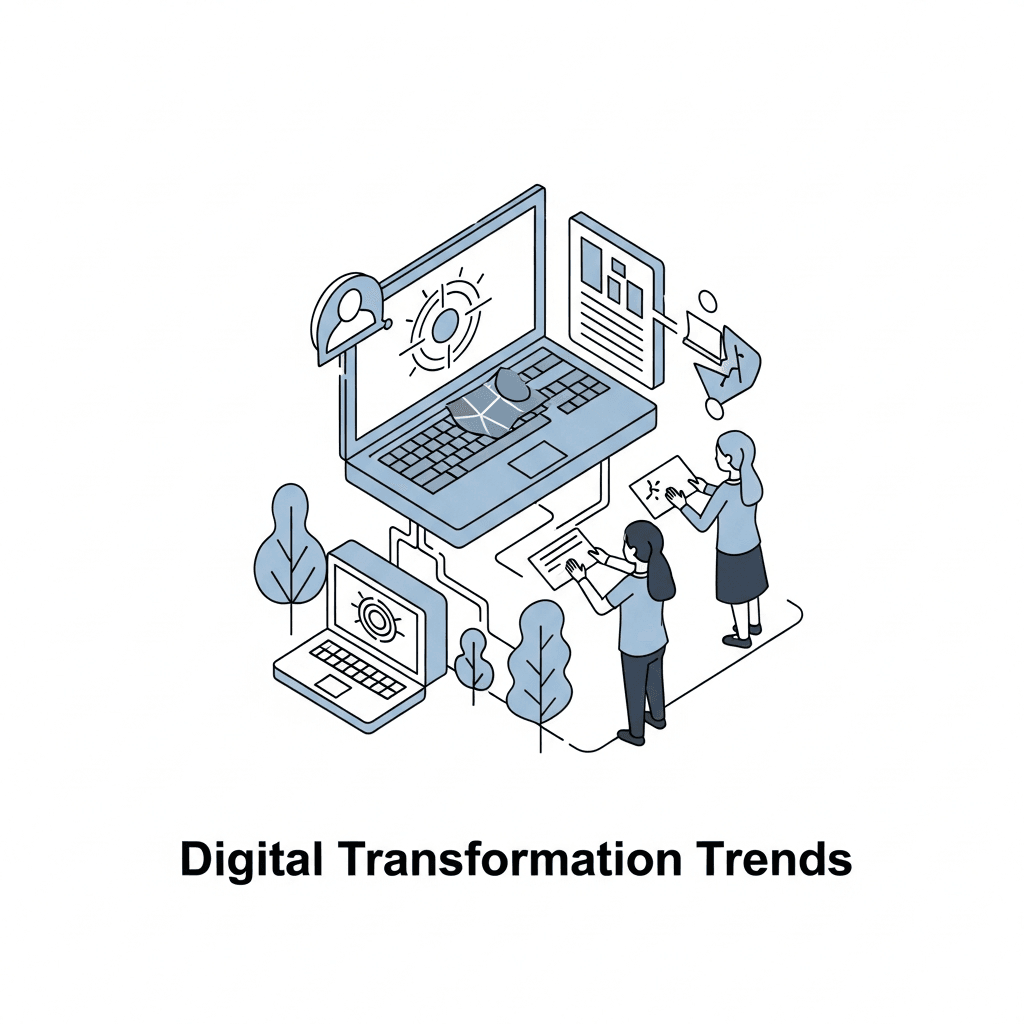
What is digital transformation? Digital transformation is the process of comprehensively applying digital technologies to all aspects of a business, from internal processes to customer interactions, to create new value, enhance efficiency, and adapt to the digital economy. Unlike simple digitization, digital transformation requires a comprehensive change in strategy, organizational culture, and business models. In the context of Industry 4.0, this concept has become a driving force for sustainable development for millions of businesses worldwide.
According to a report by McKinsey, businesses leading in digital transformation have the potential to achieve 2-3 times higher revenue growth than their competitors. In Vietnam, the government has issued the National Digital Transformation Strategy to 2025, with a vision toward 2030, emphasizing the role of technologies like AI, Big Data, IoT, and Cloud Computing. Digital transformation trends are booming with the increasing application of artificial intelligence in automation and data analysis, helping businesses forecast market trends more accurately.
To understand more clearly, digital transformation is not just about purchasing new software or equipment, but also about restructuring the organization to ensure employees are ready to adapt. For example, large corporations like VinGroup and FPT have succeeded by integrating AI Agents into their operational processes, reducing operating costs by up to 40%. Digital transformation consulting from experts is a key factor, helping businesses build a suitable roadmap and avoid common mistakes like investing in non-integrated technologies.
The year 2026 promises to be the peak of digital transformation trends with the explosion of 5G, the Metaverse, and Blockchain, opening up opportunities for Vietnamese businesses to integrate internationally. Keeping pace with these trends will help optimize costs, improve customer experience, and create a superior competitive advantage. This article will delve into the definition, benefits, challenges, and practical applications, guiding you to implement them effectively starting today.
1. Introduction to What Digital Transformation Is and Key Concepts
Definition and goals of digital transformation: Digital transformation is the process of integrating digital technology into all areas of a business to enhance performance and create new business models. The benefits of digital transformation include cost optimization, improved customer experience, and increased competitiveness. This involves not only applying technology but also changing mindsets and traditional approaches.
Integrating technology into all business aspects: Bringing technology into management and operations is not just about using software; it also involves optimizing processes and enhancing information processing capabilities. Technology solutions help businesses easily manage systems, implement data security, and create seamless connections between departments, thereby enabling scalability and a revolutionary mindset.
Changing culture, processes, and mindset: The success of digital transformation depends on a significant change in organizational culture. Flexibility and the ability to adapt to new technologies will help businesses keep up with trends and maintain sustainable growth. Businesses need to broaden their mindset, be ready to embrace innovation, and build a culture of continuous improvement.
2. Clear Definition and Importance in Modern Business
Enhancing competitiveness and flexibility: In the modern business landscape, optimizing IT Helpdesk services plays a crucial role in maintaining and enhancing competitiveness. This service helps businesses minimize downtime, optimize costs, and ensure system performance. This not only improves the ability to respond quickly to changes but also helps businesses leverage new technologies to maintain a competitive edge.
Optimizing customer and employee experience: Using IT Support services not only helps resolve technical issues but also optimizes the experience for both customers and employees. Businesses can quickly solve problems, ensure cybersecurity, and optimize their technology infrastructure. This creates an efficient and positive work environment, contributing to increased customer satisfaction.
Promoting innovation and sustainable growth: IT Systems’ cloud solutions offer scalability and flexibility for businesses. Leveraging modern cloud technology allows businesses to launch services quickly, easily upgrade hardware, and enjoy flexible payment options. These factors encourage businesses to explore and implement new initiatives, fostering long-term sustainable growth.
Making decisions based on data and analytics: An AI Agent for businesses supports process automation and data analysis, helping to make intelligent decisions based on real-world information. By integrating AI into management processes, businesses not only streamline all activities but also optimize resources, thereby making strategic decisions that yield the highest efficiency.
3. The Importance of Embracing Digital Transformation Trends for 2026
Fostering a culture of innovation within the business: Digital transformation trends create conditions for businesses to develop a culture of continuous innovation. This not only encourages employees to seek new solutions but also improves performance through the flexible application of technology. This is crucial for maintaining competitiveness and ensuring that internal processes are always up-to-date with technological advancements.
Ensuring business adaptability and resilience: The ability to react quickly to change is a major advantage of digital transformation. By applying technology, businesses can maintain continuous operations, even in adverse conditions. With this flexibility, businesses not only protect themselves but also seize new opportunities, helping to improve their market position.
Meeting changing market expectations and demands: Adapting quickly to new customer requirements is essential for maintaining and expanding market share. Digital transformation makes it easier for businesses to understand and serve customers better, creating seamless experiences and retaining loyal customers.
Shaping an effective long-term business strategy: Digital transformation not only brings short-term benefits but also helps businesses plan their long-term strategy comprehensively and effectively. Integrating technology into all aspects of the business allows for the creation of a clear roadmap, maximizing the company’s future growth potential.
4. Common Challenges When Misunderstanding What Digital Transformation Is
Focusing on technology, ignoring people: One of the main challenges in digital transformation is focusing solely on new technologies while neglecting the human element. As a result, many businesses invest heavily in IT systems but lack the skilled personnel to optimize these technologies.
Lack of long-term strategy, unclear goals: Digital transformation requires businesses to have a long-term vision and clear objectives. The absence of a clear strategy will lead to implementation failures, wasting resources without delivering real value.
Indecisive leadership, lack of involvement: Although the technology is ready, many businesses struggle due to a lack of commitment from leadership. Their involvement not only provides motivation but also gives clear direction to the entire organization.
Underestimating culture and processes: Change often faces resistance from the corporate culture. Without changing current processes and work approaches, a business can hardly leverage the full potential of digital transformation.
Security risks and data management: When technology is misunderstood, businesses can easily fall into security traps or poor data management, which can cause serious damage to their reputation and finances.
Difficulty in measuring effectiveness (ROI): Finally, the inability to accurately measure the effectiveness of digital transformation makes businesses doubt their investment decisions, which in turn affects future decisions.
Fragmented implementation, lack of integration: An uncoordinated approach that fails to integrate systems will create many bottlenecks, reducing the operational efficiency of the business. This must be addressed with a plan to connect systems and processes.
5. Benefits of Applying Digital Transformation Strategies
Optimizing operational performance: Applying digital transformation strategies helps optimize operations through process automation and improved flexibility. Businesses can minimize disruptions and downtime, ensuring IT systems operate continuously and efficiently.
Enhancing customer experience and satisfaction: When a digital transformation system is implemented, a business can provide faster and more accurate services, thereby enhancing the customer experience. This not only helps retain customers but also attracts new ones.
Making more accurate decisions based on data: Data plays a core role in the digital transformation process. By using analytical tools, businesses can make quick and practical strategic decisions, thereby strengthening their competitive advantage in the market.
Opening up new opportunities and business models: Digital transformation not only optimizes the current model but also opens up many new business opportunities. By leveraging advanced technology, businesses can develop unique service models that were previously impossible.
Reshaping business models, creating new value: The digitization process allows businesses to restructure their business models, aiming for flexibility and creativity. This, in turn, creates new value for both the business and its customers.
Putting the customer at the center of all activities: With digital tools, all customer information is thoroughly analyzed, helping businesses personalize services and products to the specific needs of each customer segment.
The core role of data and analytics: Data is considered a valuable resource, playing a leading role in steering and developing business strategy. Data analysis not only helps forecast trends but also provides deep insights, supporting smarter and faster business decisions.
6. Practical Applications in Business and the Role of Digital Transformation Consulting
Optimizing internal operational processes through technology solutions like AI Agents helps automate daily tasks. Many small and medium-sized enterprises have adopted these systems to save time and resources while minimizing operational errors.
Enhancing customer experience and interaction is one of the key benefits of digital transformation. AI technology allows businesses to create more intimate and personalized customer experiences, contributing to increased loyalty and long-term value.
Today, data analysis to support decision-making is easier than ever thanks to advanced analytical tools. Businesses can formulate more accurate business strategies based on real data from the market and their customers.
Digital transformation opens up opportunities for building new business models and services. Platforms like cloud services and AI not only optimize costs but also enhance scalability in a rapidly digitizing world.
The role of consulting goes beyond technology solutions to include providing strategic direction and a roadmap tailored to each stage of a business’s development. This allows businesses to consider and select and implement technology most effectively.
Change management and staff training play a crucial role; when personnel are well-prepared, the digital transformation process becomes smoother, minimizing disruptions.
Finally, one of the key tasks is to measure effectiveness and demonstrate investment value through metrics and case studies, ensuring the business achieves its set goals and continues to grow sustainably.
7. Conclusion and Call to Action to Apply Digital Transformation Methods
Digital transformation is becoming an indispensable part of every modern organization. With this trend, businesses need to be deeply aware of the enormous benefits it brings. It is a way to optimize processes, reduce costs, and enhance performance. Especially in an increasingly competitive market, digital transformation is an urgent step. Failure to adapt in time risks being left behind.
Key trends in digital transformation include the strong development of cloud computing and artificial intelligence. Businesses should see these not just as new technologies but as levers for sustainable growth. Embracing these trends will help organizations maintain a competitive edge and better meet future customer needs.
To succeed, building a culture of innovation is paramount. An organization needs to be ready for change and encourage an open mindset. Flexibility and creativity not only help optimize internal processes but also open up new opportunities. Digital transformation cannot be implemented effectively without strong commitment from leadership and the participation of all employees.
Finally, do not hesitate. Businesses need to start taking action and implementing their plans today. Whether it’s updating IT infrastructure or seeking new solutions, being proactive will help the organization overcome stagnation, lead the wave of digital transformation, and achieve success. Many technologies are ready to be applied today; you just need to take the first step.
FAQ
When should a business ask IT Systems for support?
Ask for support when the issue affects users, business data, security, licensing compliance, service availability or daily operations. A short technical review often prevents repeated incidents and hidden costs.
Can IT Systems help review the current environment before proposing a solution?
Yes. IT Systems can review the current setup, identify risks, map the issue to the right service scope and recommend a practical next step for your business.
Does this topic connect to ongoing IT operations?
In most cases, yes. Problems around software, cloud, endpoint, network, backup or security should be connected to a broader IT operations plan instead of being handled as isolated incidents.
Need help applying this to your business?
IT Systems Vietnam can help assess the issue, recommend the right service path and support implementation for your team.


