


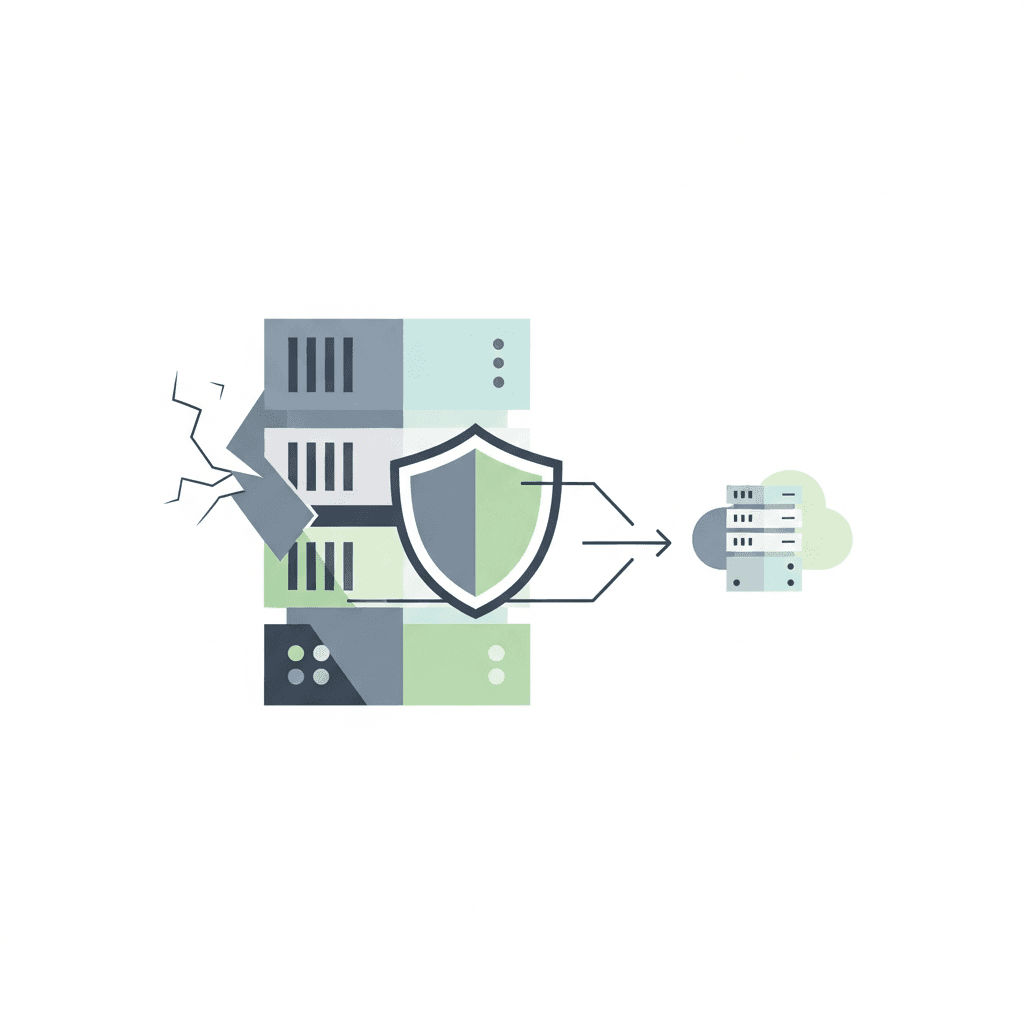
A disaster recovery plan is a key element that helps small businesses survive catastrophic risks such as ransomware attacks, data loss, or unexpected natural disasters. In the digital age, where 93% of small businesses consider data their most valuable asset (according to Veeam), lacking a disaster recovery plan can cause an average loss of $100,000 per hour of downtime, according to a report by the Ponemon Institute. For small businesses without a dedicated IT team, a disaster recovery plan not only protects data but also ensures business continuity, minimizes financial risks, and maintains customer trust.
A disaster recovery plan includes specific processes, tools, and strategies to restore IT systems after an incident. Unlike simple data backup, it integrates RTO (Recovery Time Objective) and RPO (Recovery Point Objective) to determine the acceptable time and amount of data loss. For example, a small online store could lose thousands of orders if its server crashes without a disaster recovery plan. Cloud solutions like IT Systems’ cloud solution help small businesses implement automatic data backup, offsite backups, and recovery in just a few hours.
The notable benefits of a disaster recovery plan include reducing downtime costs by up to 50%, according to IDC research, and increasing resilience against increasingly sophisticated cyber threats. Small businesses can start with affordable tools like Azure Backup or Google Cloud, combined with regular testing to ensure effectiveness. Furthermore, a disaster recovery plan helps comply with regulations like GDPR or PDPA, avoiding heavy fines from authorities.
In fact, a survey from Zerto shows that 62% of small businesses have experienced a data incident without preparation, leading to the permanent loss of customers. To avoid this, assess your risks today: Identify critical assets, choose a reliable provider, and conduct quarterly drills. A disaster recovery plan is not an expense but a profitable investment, helping small businesses compete on par with large corporations. Start building your disaster recovery plan to turn risks into opportunities for sustainable growth.
1. Understanding the Necessity of a Disaster Recovery Plan – Context & Rationale
Ensuring business continuity is one of the key reasons why businesses value a disaster recovery plan. When an IT system is disrupted by a disaster, having a specific plan helps the business quickly restore operations. This ensures that the business chain is not interrupted, contributing to optimizing performance and minimizing negative impacts on revenue.
Minimizing risks and damages is the core objective of a disaster recovery plan. Not all small businesses can afford a dedicated IT team, so creating a clear plan helps them effectively cope with unexpected incidents. An important part of the plan is regular data backup, ensuring that data is always ready for quick recovery.
For small businesses lacking a dedicated IT team, this plan goes beyond just data backup to include establishing specific recovery procedures. This helps businesses feel more confident in an ever-evolving technological landscape, and they don’t necessarily have to invest heavily in IT personnel to maintain operational stability.
2. Key Concepts in Disaster Recovery: Definitions and Examples
Distinguishing Disaster Recovery and Business Continuity: Disaster recovery focuses on restoring the entire system and data after a major incident, whereas business continuity is the process of ensuring that business operations are not interrupted even during an incident.
Recovery Time Objective (RTO): Defined as the maximum amount of time an IT system can be down after a disaster, RTO helps determine when services and infrastructure must be restored to minimize damage.
Recovery Point Objective (RPO): This is the maximum time limit for data that can be lost due to a disaster, meaning the time interval between when data loss occurs and the most recent data recovery point.
Disaster Recovery Plan (DRP): A DRP is part of an IT security solution that helps prepare the necessary steps to restore a company’s technology systems and data after a disaster. It includes specific scenarios and recovery procedures to minimize the impact of disruption.
Illustration through a real-world scenario: A large medical clinic in Southwest Florida implemented a Disaster Recovery service to ensure the safety of its data and management systems when facing a hurricane. Replicating data to the cloud allowed the system to maintain uninterrupted operations, even when the hurricane caused a power outage at the facility.
3. The Importance of a Solid Disaster Recovery Plan Strategy for Small Businesses
A solid disaster recovery plan plays a crucial role in ensuring business continuity for small businesses. When an unexpected incident occurs, the business can quickly restore operations, minimizing downtime. This is especially important for businesses without an in-house IT team, where disruptions can have severe consequences.
Beyond maintaining continuity, a disaster recovery plan also minimizes disruptions and financial losses. Service interruptions can lead to significant losses in revenue and reputation. A detailed and well-prepared plan not only helps save costs but also enables the business to seize opportunities quickly after a disaster.
Furthermore, protecting data and critical assets is essential. With increasingly sophisticated cybersecurity threats, a disaster recovery plan not only protects critical data but also ensures a rapid and accurate response to these threats. This security helps the business maintain data integrity and technological assets, which are the foundation for long-term success.
Implementing a disaster recovery plan also helps maintain reputation and customer trust. When customers see that a business can handle difficult situations flexibly and effectively, their trust is reinforced. This not only builds reputation but also maintains long-term customer relationships.
An equally important point is enhancing disaster recovery capabilities. Businesses with a disaster recovery plan are often more confident in their operations and can resume activities quickly, directly minimizing the negative impacts of a disaster.
Finally, these plans help businesses meet legal and compliance requirements. Many industries require businesses to have plans for implementing and enforcing data security and information protection policies. Having a solid disaster recovery strategy helps businesses not only comply but also be proactive in adjusting policies to meet the latest regulations.
4. Common Pitfalls and Mistakes in Disaster Preparation
Incomplete or outdated plan: A disaster recovery plan must be continuously updated to reflect changes in technology infrastructure, business needs, and the security environment. Neglecting regular updates can leave a business vulnerable to risks, not to mention the possibility of unexpected operational disruptions. Ensuring the disaster recovery plan is always current and relevant is a fundamental practice every organization should adopt.
Skipping regular testing and drills: Experience shows that a plan that seems perfect in theory may encounter obstacles in practice. Therefore, regular drills help identify and fix undiscovered vulnerabilities. It also enhances the response capabilities of the staff in the event of a real incident.
Inconsistent, hard-to-recover data backups: Although many businesses implement data backup, inconsistent practices or failing to regularly test restorability can render these efforts useless. A proper backup strategy not only ensures data continuity but also makes it easy to recover data immediately when needed.
Lack of training and clear role assignment: During a crisis, nothing is more dangerous than a team not knowing their responsibilities. An effective disaster recovery plan must be accompanied by a specific, periodic training process, along with clear role assignments for each team member.
Focusing only on technical and technological aspects: A plan that relies solely on technology while ignoring the human element can be less effective. In addition to technical skills, the team needs to understand the processes and react flexibly to unexpected events involving human factors.
Underestimating the financial impact and downtime costs: Beyond the obvious damage, disruptions can have a long-term impact on the brand and customer trust. Therefore, analyzing and preparing a budget to deal with loss scenarios should also be carefully considered in every disaster recovery plan.
Weak crisis communication plan: A recovery plan is not just about restoring systems but also includes seamless communication with all stakeholders. A lack of clear direction and ineffective communication during a crisis can worsen the situation. Implement crisis communication strategies with a dedicated communication committee to ensure all information is managed and conveyed correctly.
5. Benefits of Implementing a Strong IT Disaster Recovery Plan (Including Data Backup)
A strong IT disaster recovery plan offers many core benefits to a business, including maintaining stable operations and optimal data protection. The ability to recover from disasters like floods or fires is an essential part of an overall security strategy. Data backup plays a crucial role in preventing data loss, ensuring that critical systems can be restored quickly.
Highlighted in a business resiliency case study, the Instructional Technologies Support (ITS) department at Texas State University clearly demonstrated the power of a disaster recovery plan. They used Data Protection Manager (DPM) to back up data to tape and store it offsite weekly. As a result, when a flash flood in October 2013 destroyed all on-site servers, key services were restored from the remote data center in just a few hours.
Applying a regular backup and offsite storage plan can protect a business from the risks of data loss and prolonged downtime. This not only helps the business save on recovery costs but also maintains business continuity, building solid trust with customers and partners.
6. Practical Steps to Implement a Disaster Recovery Plan for Small Businesses, Including Data Backup
Risk Analysis and Business Impact Analysis: To build an effective disaster recovery plan, the first step is to analyze potential threats and the consequences they could have on the business. This includes assessing reliance on IT systems and the risk of data loss, thereby ensuring that the disaster recovery plan aligns with the operational reality and business goals of the small business.
Establish Recovery Objectives (RTO/RPO): Setting RTO (Recovery Time Objective) and RPO (Recovery Point Objective) targets is crucial to determine the maximum time a business can tolerate service interruption and the amount of data loss it can accept. This will help in selecting a solution that fits the budget and security objectives.
Select and Implement a Backup Solution: Small businesses can consider cloud backup solutions to leverage flexible scalability and minimize costs. IT Systems’ cloud solution helps optimize costs and enhance system scalability, ensuring data is protected against attack threats.
Build a Team and Assign Responsibilities: Ensure that all members of the organization are clear about their roles and responsibilities in the disaster recovery plan. The IT team should be trained to respond quickly to incidents and coordinate closely with relevant departments to optimize the recovery process.
Test, Drill, and Evaluate the Plan: Don’t just stop at planning; conduct regular tests and drills to evaluate the effectiveness of the disaster recovery plan in real-world scenarios. Timely adjustments will help enhance the business’s recovery capabilities.
Maintain and Update the Plan Regularly: The disaster recovery plan must be reviewed and updated frequently to reflect changes in business operations and technological advancements, helping the business always stay ready to face new challenges.
Case Study: Small Business Resiliency: A small manufacturing company in Central Texas successfully dealt with a ransomware attack thanks to its off-site data backup solution. This approach allowed them to recover quickly and resume operations without paying a ransom. To learn more, see the case study here.
7. Conclusion and Action Steps to Enhance Resiliency for Small Businesses
Resiliency plays a vital role in helping businesses withstand and overcome unexpected challenges. For small businesses, having a disaster recovery plan is essential to protect critical infrastructure and data.
Additionally, proactive planning is an indispensable step. Businesses need to invest in data backup and focus on a long-term protection plan to ensure continuous operation.
To implement this, businesses should take action steps such as establishing a well-structured disaster recovery plan, from purchasing insurance to backing up important documents to the cloud. This helps minimize downtime and unnecessary costs.
Equally important is the commitment to continuously improve and execute the plan. Ensure that individuals within the organization clearly understand their roles in a recovery scenario and are prepared for an unpredictable future.
A long-term vision of resilience will help a business become more sustainable. When a sense of security is reinforced, the business can grow without worrying about potential risks.
To illustrate this, consider the case study of a small business that was proactive in its disaster prevention planning. They quickly restored operations thanks to prior preparations and an effective response to the incident. This not only helped retain customers but also laid the foundation for long-term sustainable growth.
FAQ
When should a business ask IT Systems for support?
Ask for support when the issue affects users, business data, security, licensing compliance, service availability or daily operations. A short technical review often prevents repeated incidents and hidden costs.
Can IT Systems help review the current environment before proposing a solution?
Yes. IT Systems can review the current setup, identify risks, map the issue to the right service scope and recommend a practical next step for your business.
Does this topic connect to ongoing IT operations?
In most cases, yes. Problems around software, cloud, endpoint, network, backup or security should be connected to a broader IT operations plan instead of being handled as isolated incidents.
Need help applying this to your business?
IT Systems Vietnam can help assess the issue, recommend the right service path and support implementation for your team.


