


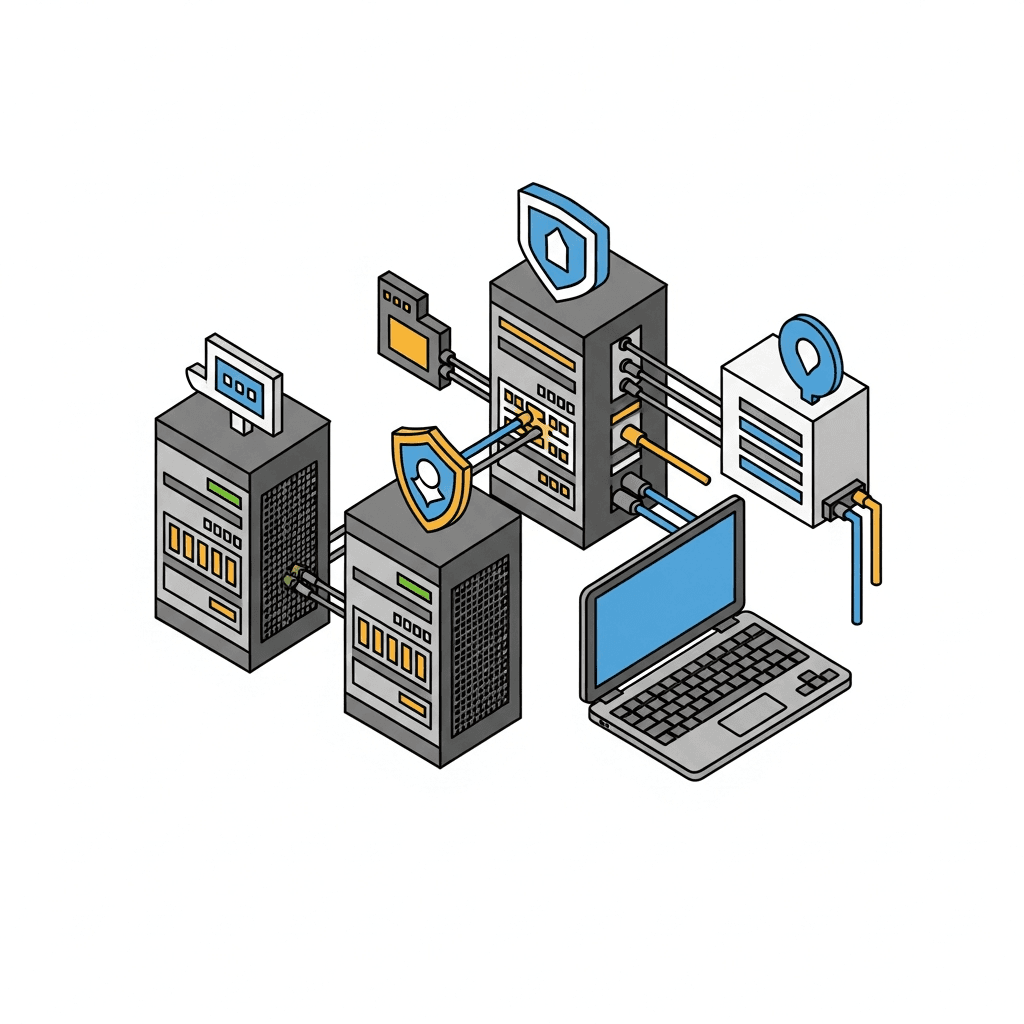
Enterprise network security is becoming a decisive factor for organizations to protect sensitive data and maintain continuous business operations in the digital age. According to reports from leading cybersecurity organizations, the average cost of a cyberattack can amount to millions of USD, causing operational disruptions and loss of customer trust. Businesses in the finance and healthcare sectors also face significant pressure from strict legal regulations like PCI DSS or HIPAA, requiring systems to ensure confidentiality, integrity, and availability.
So, what does enterprise network security encompass? It is a comprehensive set of technical solutions, processes, and people aimed at preventing and recovering from threats. From firewalls, intrusion detection/prevention systems (IDS/IPS) to data encryption and employee training, each layer of protection plays a crucial role. Meanwhile, corporate cybersecurity emphasizes building a culture of safety, integrating security into every business process.
Advanced network security solutions like AI and machine learning help detect threats in real-time, minimizing risks from the supply chain and third parties. According to a Gartner survey, 99% of cyberattacks could be prevented if businesses adopted best security practices. Furthermore, investing in security is not just a cost but a long-term investment, helping to save on post-incident recovery costs and enhance competitive advantage.
To support businesses, services like IT Support are essential, providing comprehensive assistance from diagnostics and troubleshooting to system management. With the trends of cloud and IoT, the ability to quickly adapt with network security solutions will determine a business’s viability. Let’s delve into the details through the article below to build an effective security strategy.
1. Understanding Security Requirements in the Finance and Healthcare Sectors
Cyberattacks cause severe economic and financial consequences, especially in the finance and healthcare sectors. Vulnerable systems not only halt business operations but also cause significant damage as organizations face enormous recovery costs. In this context, applying network security solutions and optimizing corporate cybersecurity become top priorities to protect enterprise network security.
The service supply chain also contains many security risks that cannot be overlooked. As businesses rely on third parties to handle sensitive data, each additional network connection can increase the likelihood of an attack. Therefore, it is necessary to inspect and protect every point of contact to maintain the stability of network security.
Cross-industry vulnerabilities also increase security and privacy risks. Different industries often share data connections without adequate protection measures, leading to shared vulnerabilities. Enhancing continuous monitoring and authentication capabilities within the network system is part of an effective security solution.
Enhancing resilience and resistance to attacks is a core element in maintaining business continuity. A strategy of system optimization and tight security not only helps minimize risks but also significantly improves operational performance.
A typical case study from the finance-healthcare system can illustrate this. The Change Healthcare ransomware attack caused the company to suffer damages of up to billions of dollars and forced a nationwide disconnection, causing major disruptions in payment and healthcare services. These consequences emphasize the need for methodical and scientific investment in network security solutions.
2. Clarifying Key Concepts of Corporate Cybersecurity
Corporate cybersecurity is not just about implementing enterprise network security solutions, but also about creating a solid foundation for the long-term development of the organization. It is a strategic element that ensures sensitive information and critical data are not compromised or stolen.
Currently, businesses face many common types of cyberattacks such as phishing, ransomware, and social engineering attacks. To counter these threats, it is essential to effectively combine people, processes, and technology. Personnel need to be trained to recognize threats, risk management processes must be strictly implemented, and advanced security technology must be deeply integrated into the IT infrastructure.
Applying the CIA triad (Confidentiality, Integrity, Availability) is core to building network security solutions. This principle not only helps protect data but also ensures that the system is always operational and ready to meet business needs without service interruptions. In the current digital economy, a strong and effective security system will give businesses great confidence in competing and achieving sustainable growth.
3. The Importance of Enterprise Network Security
Enterprise network security is a crucial factor in protecting core data assets. The possibility of data leaks can lead to the loss of sensitive information, affecting the reputation and operations of the business. Network security solutions, such as IT Support services, provide in-depth assistance from diagnostics and troubleshooting to system management and ensuring network security, which are core factors helping businesses maintain stable and secure operations.
Ensuring business continuity is also an indispensable factor. Every disruption in the IT system can have a negative impact on revenue and legal compliance. Services like IT Helpdesk and Cloud Solutions aim to optimize performance and minimize downtime, thereby contributing to maintaining continuous business operations.
Minimizing financial risks when businesses face issues like ransomware is essential. A prime example is the attack on Change Healthcare, where Blackcat exploited a security vulnerability, leading to the exposure of 6 terabytes of sensitive data. CHG had to disconnect its systems, causing severe disruption to the U.S. healthcare system, with costs reaching billions of USD. (details here).
Maintaining reputation and trust with partners is part of affirming a business’s position in the market. Corporate cybersecurity solutions not only protect data but also help strengthen trust with partners and customers through services and strategies that optimize costs and long-term security.
4. Common Mistakes When Implementing Enterprise Network Security
Lack of a comprehensive security strategy: Many businesses still do not realize the importance of a comprehensive security strategy, leading to gaps in their enterprise network security. A complete strategy not only protects data but also optimizes corporate cybersecurity solutions to ensure safety against increasingly sophisticated threats.
Underestimating periodic risk assessments: Periodic risk assessment is vital for maintaining corporate cybersecurity. Ignoring this process can easily lead to uncontrolled risks, causing significant damage. Businesses need to regularly review and update network security solutions to match the current situation and new threats.
Ineffective incident response: To secure the enterprise network system effectively, incident response capabilities need to be optimized. A quick and flexible response plan not only helps to resolve incidents in a timely manner but also minimizes damage. This is a crucial factor in maintaining stability and customer trust.
Ignoring supply chain risks: Supply chain risks are often underestimated, although they can be a gateway for attacks. Businesses need to carefully evaluate partners in the supply chain and establish strict security standards to avoid being compromised by insecure suppliers.
Inadequate user awareness training: One of the most effective security measures is to raise cybersecurity awareness among employees. If training is inadequate, employees can become easy targets for attacks. Investing in regular training is the best way to protect the entire system from threats.
Outdated, un-updated technology: Using outdated technology without regular updates is a serious mistake. Vulnerabilities in old software are easy targets for cybercriminals. Businesses need to continuously update and upgrade their technology to ensure corporate cybersecurity is always in the best possible state.
5. Benefits of Implementing Advanced Network Security Solutions
Implementing advanced network security solutions helps minimize financial damage and disruptions, ensuring that businesses can operate continuously without unexpected interruptions. These solutions provide a solid layer of protection to prevent potential cyberattacks, thereby reducing the risk of financial loss due to system downtime or data theft.
Protecting the organization’s sensitive data is a top priority, especially as enterprise network security becomes increasingly complex. Corporate cybersecurity solutions can protect sensitive information from intruders, ensuring data confidentiality and integrity in every situation.
When a business demonstrates its ability to protect customer information and maintain system security, its reputation and customer trust will be enhanced. Customers feel more secure and confident when interacting with a business that has a strong security system.
Meeting legal compliance requirements is also an important part of implementing network security solutions. Businesses must comply with current laws and regulations on data protection and privacy, which not only helps avoid fines but also strengthens trust from partners and customers.
Enhancing post-incident recovery capabilities is another major benefit. With advanced security tools and processes, businesses can quickly restore operations and continue to serve customers promptly and effectively, minimizing downtime.
Finally, advanced network security solutions offer the advantage of proactively preventing security threats. Instead of reacting after an attack has occurred, businesses can detect and stop potential threats before they cause damage, ensuring the system is maximally protected in every situation.
6. Applying Network Security Solutions in a Business Context
In today’s business context, building a comprehensive cybersecurity program is essential to protect a company’s digital assets and maintain corporate cybersecurity. Collaboration between internal departments to assess risks, identify weaknesses, and deploy monitoring tools is the first step in this process.
Integrating cybersecurity into the business strategy not only helps secure the enterprise network system but also contributes to strengthening market competitiveness. Businesses can leverage network security solutions to improve flexibility and adaptability, thereby minimizing risks and optimizing operational performance.
Managing supply chain and third-party risks is a critical component of the security strategy. Reliance on external suppliers and partners makes third-party risk management a top priority. A success story is when a large healthcare system implemented a Third-Party Risk Management program, which helped optimize processes and strengthen its security foundation. This was the result of automating and standardizing processes through a TPRM program.
Measuring the effectiveness and economic impact of security solutions on the business requires establishing clear metrics to evaluate the return on investment. This not only provides cost assurance but also helps businesses recognize the long-term benefits of implementing network security solutions.
Building resilience and incident response capabilities is also an essential part of the cybersecurity strategy. In case of an unexpected situation, businesses need to have contingency plans and rapid response measures in place to minimize damage and maintain operations.
7. Conclusion and Call to Action to Strengthen Enterprise Network Security
Summary of key points on cybersecurity: Businesses today cannot be complacent with network security solutions because the threats of attacks are increasingly sophisticated. Data loss not only affects revenue but also reduces trust from customers and partners. Therefore, investing in enterprise network security is indispensable.
Emphasizing the importance of proactivity: Beyond just installing security software, a comprehensive cybersecurity strategy requires businesses to proactively detect and handle potential threats before they cause real harm. This helps save on recovery costs and, more importantly, ensures corporate cybersecurity.
Cybersecurity as a strategic investment: For businesses, security is not just a cost but a long-term strategic investment. A strong security system helps maintain continuous operations, enhances efficiency, and ensures business reliability. Network security solutions also play a role in optimizing performance and protecting valuable data.
Call for continuous security assessment and improvement: Technology and threats are constantly changing, so continuously assessing and improving security solutions is essential. Businesses need to regularly review and update their systems to ensure optimal security.
Promoting a comprehensive security culture in the organization: Every member of the organization, from employees to leadership, must be aware of and practice cybersecurity. A strong internal environment will help ensure that enterprise network security is not just the responsibility of one department but of the entire organization.
Requiring commitment from leadership on security: Commitment and support from leadership are decisive factors for the success of a cybersecurity strategy. Leaders need to approve plans, resources, and budgets to implement effective network security solutions.
FAQ
When should a business ask IT Systems for support?
Ask for support when the issue affects users, business data, security, licensing compliance, service availability or daily operations. A short technical review often prevents repeated incidents and hidden costs.
Can IT Systems help review the current environment before proposing a solution?
Yes. IT Systems can review the current setup, identify risks, map the issue to the right service scope and recommend a practical next step for your business.
Does this topic connect to ongoing IT operations?
In most cases, yes. Problems around software, cloud, endpoint, network, backup or security should be connected to a broader IT operations plan instead of being handled as isolated incidents.
Need help applying this to your business?
IT Systems Vietnam can help assess the issue, recommend the right service path and support implementation for your team.


