


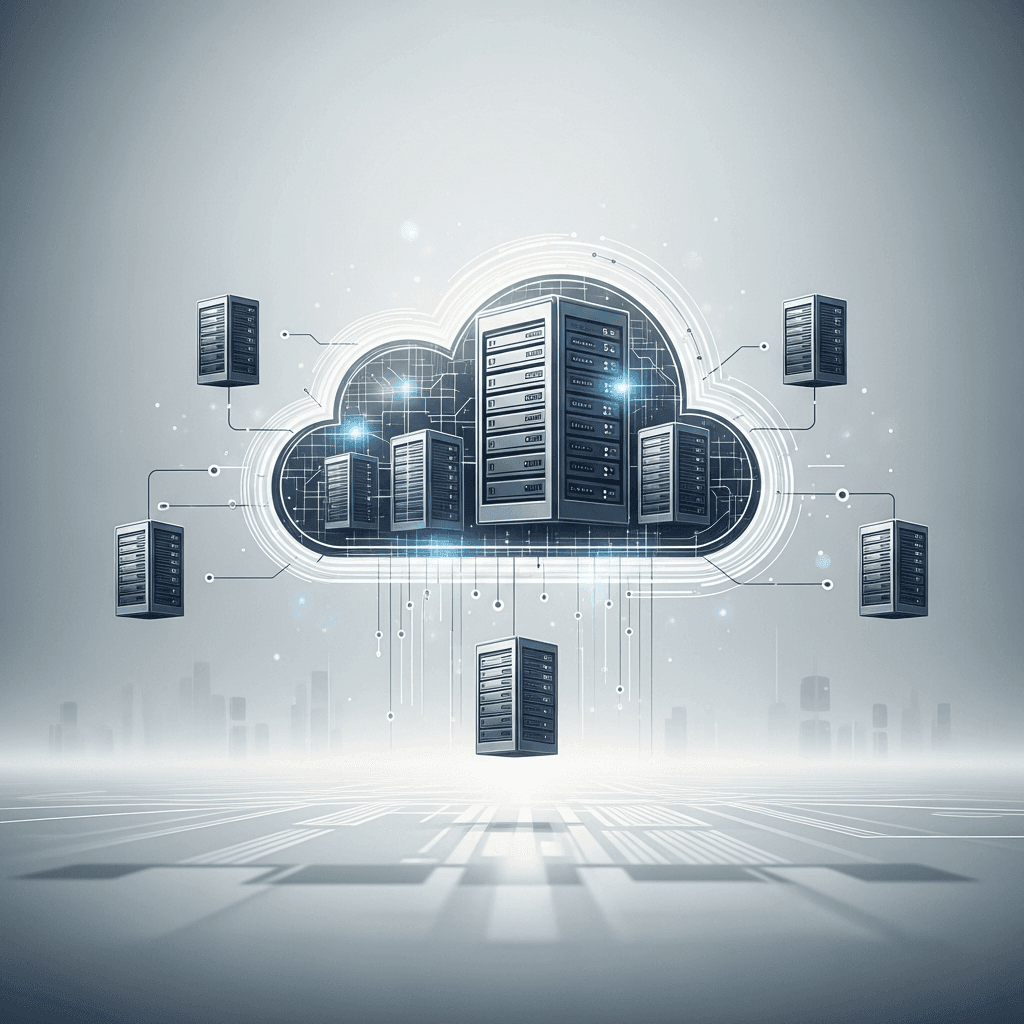
Cloud servers are becoming an indispensable technology infrastructure solution for startups in the explosive era of digitalization. By providing flexible computing resources, cloud servers help young businesses overcome barriers like high initial investment costs and physical space limitations. Instead of spending millions of dollars on on-premise servers, startups can rent cloud servers on-demand, paying only for what they actually use, thereby optimizing cash flow and concentrating resources on core product development.
In a fiercely competitive market, speed is a decisive factor for survival. Cloud servers stand out with their ability to scale up/down instantly, allowing systems to handle thousands of concurrent users without interruption. Platforms like AWS, Google Cloud, and Azure have proven their effectiveness with millions of businesses globally, but even local providers offer comparable value at more reasonable costs for Vietnamese startups. Furthermore, integrating AI and machine learning on cloud servers helps startups quickly deploy advanced features, from real-time data analysis to process automation.
Security is a top concern, and cloud servers excel with multi-layered protection such as data encryption, automatic firewalls, and continuous backups. Startups do not need a large IT team for management, as the provider is responsible for 99.99% uptime and disaster recovery. Compared to physical servers, hidden costs like power, cooling, and personnel maintenance can account for up to 40% of the annual IT budget, whereas cloud servers completely eliminate these burdens.
For SaaS or mobile app startups, cloud server services support hybrid cloud, combining public and private clouds to balance cost and data control. Case studies from Vietnam show a 300% increase in revenue just 6 months after switching to the cloud, thanks to the ability to scale according to seasonal demands or marketing campaigns. For effective implementation, startups should assess their traffic needs, choose a suitable package, and leverage integrated monitoring tools. Learn more about specialized cloud solutions for Vietnamese businesses.
In summary, to rent a cloud server is not just a trend but a smart strategy that helps startups accelerate sustainable growth, reduce risks, and enhance their competitive advantage in the global market.
1. Introduction: Cloud Server – A Crucial Infrastructure Decision for Tech Startups
In the fast-paced development of tech startups, technology infrastructure plays an essential role, serving as the solid foundation for sustainable business growth. A robust cloud server system not only enhances operational performance but also ensures flexibility in modification and optimization. This is particularly important for startups looking to optimize costs while still needing the ability to scale quickly to keep up with market demands.
The decision to choose the right cloud server service has a significant impact on the cost and sustainability of the system. Services like renting a cloud server not only help save on initial investment costs but also allow businesses to pay only for the resources they actually use. As a result, startups can easily adjust the system’s scale according to their development stage without worrying about the costs of maintaining and managing IT infrastructure.
Furthermore, having a solid technology infrastructure is not just a necessity but a competitive advantage. It helps enhance data security, minimize the risk of downtime, and thereby improve the company’s reputation and reliability in the eyes of customers. The hybrid cloud model is an ideal choice, combining stability and flexibility to help startups achieve rapid growth while ensuring data safety.
2. Decoding the Financial Equation: Capital Expenditure (CapEx) of Physical Servers vs. Operating Expenditure (OpEx) of Renting a Cloud Server
The initial capital expenditure (CapEx) for physical servers is often a major financial burden, requiring the purchase and installation of hardware. In contrast, using a cloud server service helps businesses avoid these sudden expenses, as they only need to rent and pay according to their usage needs.
The operating expenditure (OpEx) when renting a cloud server includes recurring monthly or annual payments. This helps businesses easily forecast and manage cash flow, avoiding the pressure of large capital investments required for purchasing physical servers.
When comparing the total cost of ownership (TCO), cloud servers often provide long-term benefits. Although the costs are ongoing, renting a cloud server is usually more economical than maintaining and servicing physical servers, while also avoiding indirect costs related to downtime and maintenance.
The choice between CapEx and OpEx also has a major impact on a startup’s cash flow and budget. The flexible cost model of cloud server services helps startups save on initial costs, freeing up financial resources for other activities.
Each model has its own financial benefits. Physical servers may be suitable if a business needs complete control over its IT infrastructure, while cloud servers offer payment flexibility and scalability.
Finally, the flexibility and cost scalability of cloud servers cannot be overlooked. Businesses can easily adjust resource capacity according to their needs, ensuring they can always meet business requirements without worrying about complex hardware upgrades.
3. Comparing Scalability: Meeting Demands Without Breaking the Budget
Rapid Scaling to Handle Large Workloads: Using a cloud server service helps businesses expand their system quickly, in just a few minutes. The ability of modern cloud solutions to add resources like RAM or GPU allows for handling large workloads without interruption. This is especially important for businesses seeking flexibility and speed in IT resource management to maintain continuous operations.
Flexible Scaling Based on Actual Usage: Cloud server services offer a flexible scaling solution, allowing businesses to use and pay for only what they truly need. This helps optimize costs, particularly for small businesses in the IT industry that always need to be mindful of their budget. The ability to adjust resources flexibly helps businesses maintain high performance in their operations without being limited by fixed IT infrastructure.
Pay-as-you-go Pricing Model: With a service to rent cloud server, businesses can choose a flexible pricing model, from monthly or quarterly payments to billing based on actual resources used. This not only helps manage costs effectively but also ensures that the business only spends on necessary resources without waste. This model is suitable for businesses aiming for growth while maintaining financial efficiency.
4. Hidden Costs: Maintenance, Security, and Technical Expertise for Physical Servers
Hardware Replacement and Upgrade Costs: One of the hidden costs of managing physical servers instead of using a cloud server service is the cost associated with hardware replacement and upgrades. A powerful server system from DELL EMC can be a good choice, but it’s essential to ensure the hardware is always performing at its best to avoid business disruptions. RAM or GPU upgrades need to be performed periodically or when the business requires increased performance.
Power and Cooling Operational Costs: Physical servers typically consume a lot of electricity not only for operation but also for the cooling system to maintain a stable temperature. This can sometimes significantly increase operational costs, requiring businesses to invest in efficient power systems and air conditioning to reduce the financial burden.
Ensuring Physical Security for Servers: Besides using high-tech solutions to protect data, ensuring the physical security of servers is also a significant hidden cost. Basic security measures may not be sufficient if a business wants to protect its servers from risks like theft or natural disasters.
Requirement for Highly Skilled IT Staff, Salaries, and Training: Maintaining physical servers requires a highly skilled IT team to handle complex technical issues. This entails not only salary costs but also training expenses to keep the team updated with new technologies and to deal with more complex security threats.
Implementing Security and Backup Software: Using security software and data backup solutions is essential to protect a company’s critical information. Investing in advanced security software like Endpoint Security (EDR) and secure backup solutions is necessary to ensure recoverability after an incident. However, implementing and maintaining this software is not a small expense and needs to be carefully calculated in the budget.
5. The Advantages of Cloud Servers: Flexibility, Reliability, and Speed to Market
Cloud servers offer outstanding flexibility, as businesses can easily scale resources up or down according to demand in just a few minutes. This allows businesses to save costs and optimize operational performance without a heavy initial investment in hardware. By renting cloud server services, small and medium-sized enterprises can also operate without complex infrastructure.
With a cloud server service, rapid deployment helps shorten the time to market for products. Businesses can start using cloud services easily without facing the difficulties related to installing and maintaining their own infrastructure. Additionally, flexible payment based on resource usage allows small and medium-sized businesses to manage costs more effectively.
The high reliability of cloud servers in ensuring data integrity and recovery cannot be overlooked. With a securely protected system and the ability to access data anytime, anywhere, businesses can easily set up disaster recovery plans, minimizing the risk of data loss and maintaining continuous operations.
6. Case Study: How a SaaS Startup Leveraged Cloud Server Services to Scale Rapidly
The Startup’s Infrastructure Challenges: Many SaaS startups face the problem of unoptimized technical infrastructure, leading to resource wastage and management difficulties. These challenges not only increase costs but also pose a risk of downtime, affecting their ability to serve customers continuously.
Transitioning to a Flexible Cloud Server Solution: Using cloud server services is an effective solution that helps startups flexibly increase or decrease resources based on actual needs. The cloud solution allows for quick service initiation and easy hardware upgrades, helping businesses save time and effort in infrastructure management. This enables a rapid response to market changes without a large investment in physical facilities.
Optimizing Operational Costs: Renting a cloud server not only helps reduce operational costs but also brings transparency to financial management, thanks to the flexible payment model based on resources used. This solution helps optimize resource utilization, allowing for a greater focus on product development and market expansion.
Enhancing Rapid Scalability: Cloud servers support businesses in effectively optimizing their ability to scale, ensuring the system can handle sudden increases in user numbers. This capability is particularly important for SaaS startups, where user demand can change quickly.
Business Growth Results: By effectively applying cloud server services, many startups have witnessed significant improvements in their business operations. The ability to scale quickly and flexibly has helped accelerate revenue growth and reach more customers, creating conditions for sustainable future development.
7. When Physical Servers Are Still a Viable Option: Data Sovereignty and Specialized Tasks
While many businesses choose cloud server services to optimize costs and enhance scalability, physical servers still play an irreplaceable role for companies with high requirements for data sovereignty and specialized tasks. Especially for small and medium-sized businesses in sectors like finance or healthcare, data security is a matter of survival. Self-managing physical servers allows them to have complete control over sensitive data without worrying about risks from third parties.
The ability to customize flexibly and not be dependent on a cloud service provider is a major advantage of physical servers. For fast-growing businesses, adjusting server configurations to meet work demands is crucial, especially when specialized tasks are deployed. Additionally, using physical servers can help businesses save on long-term costs when dealing with large amounts of data that cloud server services might not optimize for.
Finally, although cloud server services offer many benefits, physical servers remain the top choice for building a specialized system, helping businesses maintain security and stable performance in specific environments. Businesses should carefully consider the choice between renting a cloud server and investing in a physical server depending on their specific needs and development direction.
8. Conclusion: Making a Strategic Choice for Your Startup’s Future
Choosing between a cloud server solution and traditional services like on-premises is a crucial decision for startups today. Each solution has its own pros and cons. A cloud server allows cloud server services to be deployed more quickly and efficiently, with high scalability and security. However, it depends on the stability of the internet connection and has a fixed monthly service cost. Meanwhile, a traditional solution requires a high initial investment but incurs no further infrastructure rental costs.
For newly established or budget-limited businesses, renting a cloud server service is the optimal solution, thanks to its scalability, risk mitigation, and cost savings. During a rapid growth phase, a cloud solution helps optimize performance without interrupting operations. When a business reaches a certain level of stability, considering a return to the traditional model to optimize fixed costs can be a reasonable choice.
A startup’s long-term vision should be geared towards building a flexible IT system that can easily integrate with new technologies in the future. This not only ensures sustainable development but also enhances competitiveness in the market. Thus, shaping a suitable vision will help the business be more proactive in dealing with technological and market changes.
FAQ
When should a business ask IT Systems for support?
Ask for support when the issue affects users, business data, security, licensing compliance, service availability or daily operations. A short technical review often prevents repeated incidents and hidden costs.
Can IT Systems help review the current environment before proposing a solution?
Yes. IT Systems can review the current setup, identify risks, map the issue to the right service scope and recommend a practical next step for your business.
Does this topic connect to ongoing IT operations?
In most cases, yes. Problems around software, cloud, endpoint, network, backup or security should be connected to a broader IT operations plan instead of being handled as isolated incidents.
Need help applying this to your business?
IT Systems Vietnam can help assess the issue, recommend the right service path and support implementation for your team.


