


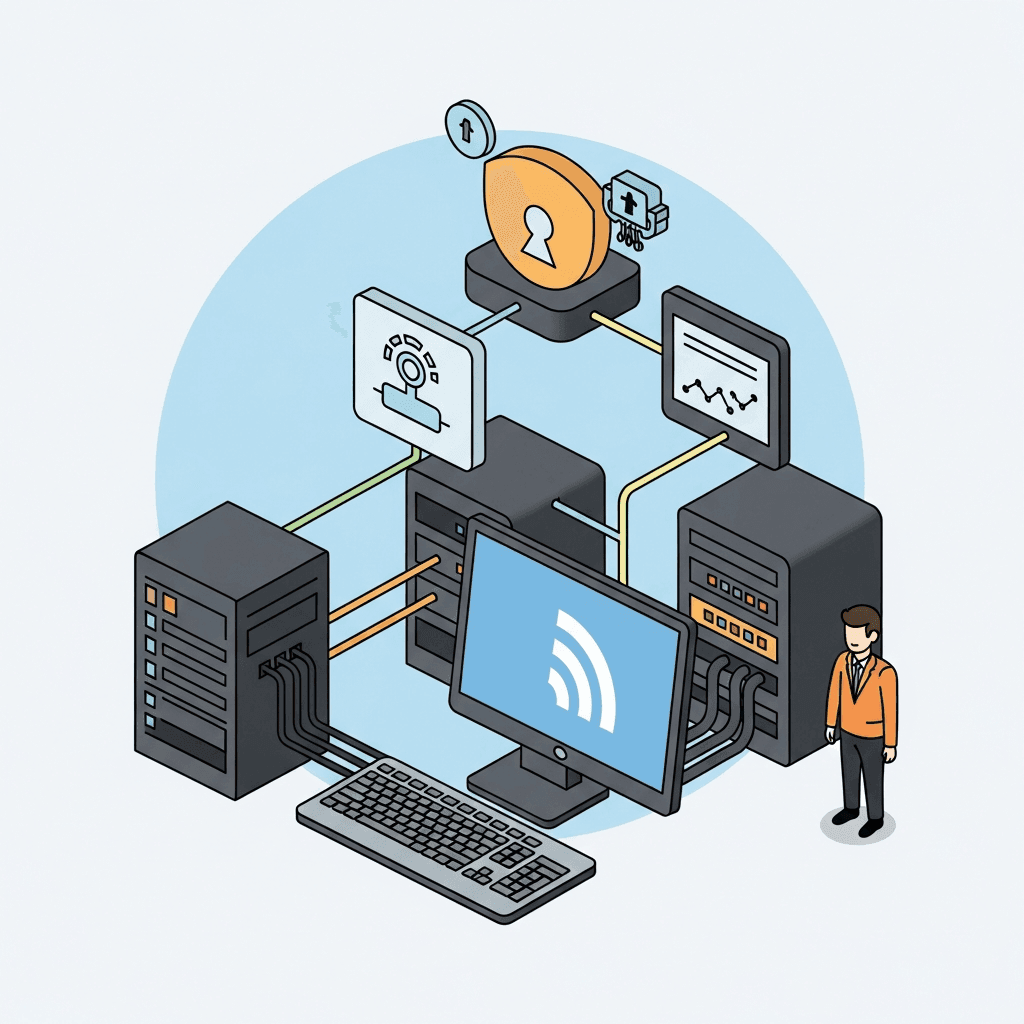
Cybersecurity is becoming a top priority for every business in the digital age, where digital threats are constant and increasingly sophisticated. The rise in cyberattacks not only causes enormous financial damage but also erodes trust from customers, partners, and shareholders. According to recent reports from global security organizations, millions of attacks occur daily, targeting businesses of all sizes, from small to large. Therefore, building a comprehensive business network security strategy is key to protecting valuable digital assets.
In the modern business environment, cybersecurity is not just about installing basic antivirus software but requires a combination of advanced technology, strict management processes, and high human awareness. Businesses need to identify early signs of risks such as phishing, ransomware, or DDoS attacks to respond promptly. Furthermore, with the growth of remote work and the cloud, protecting mobile data and remote access has become more critical than ever, helping to maintain uninterrupted business operations.
Information security plays a core role in complying with legal regulations such as GDPR or Vietnam’s Cybersecurity Law, avoiding heavy fines and litigation. Businesses should invest in solutions like SIEM (Security Information and Event Management) for real-time monitoring, combined with regular employee training to enhance detection and response capabilities. Additionally, partnering with reputable service providers can offer a significant advantage, for example, a specialized IT Support service helps optimize infrastructure and implement multi-layered protection.
Finally, a strong cybersecurity system not only defends but also supports business growth by building trust and expanding opportunities. Businesses that proactively invest today will lead in the future, avoiding irreparable losses from security incidents. Start assessing your risks now to ensure sustainable growth.
1. Overview of Cybersecurity Alerts
Currently, ensuring business network security is a crucial factor for sustainable development. IT Support services not only help optimize information technology infrastructure but also focus on protecting information security. With the rise of new attack forms, businesses need to focus on advanced security solutions like Endpoint Security (EDR) instead of just using traditional Antivirus software. This is very important to avoid risks related to cybersecurity and maintain continuous operational capability.
Risks from non-technical attacks, such as Social Engineering, are increasingly concerning. Hackers not only attack computer systems but also “hack” your employees, forcing companies to face the challenge of enhancing information security. Businesses need to invest in personnel training programs to recognize and respond to these threats, while also applying advanced security strategies.
Implementing a Zero Trust strategy is an advanced security approach that businesses should not overlook. Instead of trusting devices within the traditional firewall, Zero Trust requires verifying every access to the network system. This is a critical step in ensuring cybersecurity and protecting the company’s valuable information assets against increasingly sophisticated attacks.
2. 5 Common Security Vulnerabilities
Data privacy risks are one of the top critical issues that small and medium-sized enterprises face. Failing to carefully protect personal information can lead to data breaches and severe consequences. Any mistake in data handling can cause legal troubles and damage the business’s reputation. Therefore, ensuring information security is essential, especially with the development of non-technical attack techniques like social engineering and online scams.
Meanwhile, vulnerabilities in system security are often overlooked, especially in small and medium-sized businesses. These vulnerabilities can be exploited by attackers to penetrate the system, causing operational disruptions and direct financial losses. Businesses need to regularly check and fortify their systems to prevent the risk of external attacks.
Regarding access control and user identity management, a lack of strict management can lead to serious security risks. Implementing measures such as multi-factor authentication and access rights management will help protect corporate resources from unauthorized access and minimize the risk of data exposure.
The threat from malware is also a major concern. Malware can infiltrate systems through weak channels like emails or downloading software from unknown sources, causing disruption and data loss. Using advanced security solutions like Endpoint Security will ensure more effective business network security.
Finally, social engineering and online scams are becoming more common. Employees can become victims of non-technical attacks when their information is exploited to infiltrate the company’s system. To mitigate this risk, it is necessary to raise awareness and train employees on prevention methods, along with regularly conducting internal security checks to maintain a strong level of cybersecurity.
3. How Security Vulnerabilities Occur
In the operation of IT systems, configuration errors often top the list of security vulnerabilities. Failure to regularly update configurations or omitting necessary security procedures can pave the way for cybersecurity risks. This can lead to unauthorized intrusion and theft of important data, seriously affecting business network security.
The human factor also plays a significant role in creating security vulnerabilities. Careless decisions and a lack of information security awareness among employees can lead them to accidentally install malware or open phishing emails. This not only affects information security but also creates opportunities for hackers to access and exploit company data.
Risks from the software supply chain are another factor that cannot be overlooked. When businesses use and integrate software from third parties without thoroughly vetting their security protocols, they can become targets for attacks. Ensuring cybersecurity requires a comprehensive strategy, including choosing reliable software partners to minimize potential risks.
4. Specific Consequences for Small Businesses
Disruption of IT system operations can severely affect the activities of small businesses. This stagnation often brings high security risks and vulnerabilities, making the company an easy target for cyberattacks. Cybersecurity is considered a vital element in today’s context, where all information and work processes depend heavily on the IT system.
The accumulation of complex technical incidents is inevitable without an effective management solution. Small businesses often struggle with self-managing their technology infrastructure, leading to unexpected repair and maintenance costs. This is not just a technical issue but also has a direct negative impact on the company’s finances.
Finances are under great pressure from recovery costs when the IT system fails. In addition, business interruption leads to revenue loss and a decrease in employee productivity. With fierce competition, losing customers and competitive opportunities becomes a reality when a business cannot maintain continuous and stable operations.
Finally, effective management and optimization of the technology system help limit unwanted problems. Business network security is the key to maintaining sustainable development in the long run, while also avoiding unforeseeable future losses.
5. Checklist for Assessing Business Network Security Risks
Identify security threats: Identifying potential threats is the first step to strengthening cybersecurity. Businesses need to focus on new forms of attacks like deepfake phishing and social engineering. These types of attacks not only cause material damage but also affect brand reputation by targeting human weaknesses rather than systems.
Evaluate access control systems: Establishing a strict access control system helps minimize risks from both internal and external sources. Implementing a zero trust model, where every user must prove their identity before access, helps businesses minimize the possibility of unauthorized intrusion.
Analyze data protection policies: To ensure information security, businesses need a strategy for immutable data backups. This not only helps protect data from ransomware but also ensures quick recovery in case of an incident.
Review incident response procedures: Businesses need a standardized emergency response procedure to synchronize actions as soon as an incident is detected. This helps limit damage and ensures continuous security for the company’s network system.
Check monitoring and threat detection: A continuous monitoring system helps businesses detect abnormal signs in a timely manner. Using modern endpoint security technology provides the ability to detect and block potential threats before they escalate.
Assess risks from suppliers: In a global business context, thoroughly vetting partners and suppliers for cybersecurity is necessary. These criteria should be integrated into the company’s compliance rulebook to minimize risks from the supply chain.
6. Prevention and Mitigation Strategies to Ensure Information Security
People: The human element plays a decisive role in ensuring information security. Employees need regular training on security risks and how to handle dangerous situations. The ability to recognize and react quickly to suspicious activities will minimize the risk of attacks from both inside and outside.
Technology: Applying advanced security technologies like AI and machine learning can help identify and mitigate threats from their earliest stages. Enhancing business network security through technological solutions will ensure optimal information security.
Identity and Access Management: Authentication and access authorization are key elements in security administration. It is necessary to ensure that only authorized personnel can access critical information to prevent unwanted access and protect corporate data.
Encrypting data at rest and in transit: Data needs to be encrypted during storage and transmission to protect it from unauthorized access. This method helps ensure the confidentiality and integrity of information, even if the system is compromised.
Automating threat detection and response: An automated system for monitoring and responding to threats will help minimize the risk of data loss. The ability to automatically update and handle security vulnerabilities is also essential in cybersecurity.
Securing systems and AI applications: AI is used to optimize the detection and handling of security threats. This way, businesses can prevent risks from malware, hackers, and other malicious actors, ensuring information security is always protected.
Processes: Establishing clear and detailed security processes will help the organization operate effectively when facing security risks. Standardized procedures also help reduce subjectivity, human error, and optimize cybersecurity management.
Developing an incident response plan: Businesses need to develop a plan for a rapid response to security incidents. This not only limits losses but also helps restore system operations quickly after each incident.
Regular data backup and recovery: Performing regular backups is necessary to protect data from loss. Whether attacked or facing a system error, having backups available will help businesses restore data quickly and effectively.
Compliance with regulations and security standards: Ensuring compliance with security regulations and standards is the foundation for businesses to operate effectively and protect customer information. Monitoring and updating with the latest regulations will help businesses not only protect themselves but also meet market demands.
7. Call to Action to Enhance Cybersecurity
To build a proactive security culture within a business, the first step is to encourage all employees to understand their responsibility in protecting information. This goes beyond following basic rules about passwords and data; it requires each person to be aware of potential cybersecurity attack risks and know how to respond effectively.
Besides building a security culture, investing in cybersecurity awareness training is extremely important. Training not only helps employees update their knowledge on business network security and information security but also builds confidence when they face security threat situations. Through this, businesses can minimize the risk of being attacked, while also promoting operational efficiency and information security thanks to the proactive security understanding and compliance of the entire team.
FAQ
When should a business ask IT Systems for support?
Ask for support when the issue affects users, business data, security, licensing compliance, service availability or daily operations. A short technical review often prevents repeated incidents and hidden costs.
Can IT Systems help review the current environment before proposing a solution?
Yes. IT Systems can review the current setup, identify risks, map the issue to the right service scope and recommend a practical next step for your business.
Does this topic connect to ongoing IT operations?
In most cases, yes. Problems around software, cloud, endpoint, network, backup or security should be connected to a broader IT operations plan instead of being handled as isolated incidents.
Need help applying this to your business?
IT Systems Vietnam can help assess the issue, recommend the right service path and support implementation for your team.


